

Good morning. GitHub Enterprise now comes with Copilot, and every chat request draws on a usage budget from the first one. And Anthropic’s filing to go public says that it has changed rate limits and model capabilities before and may again.
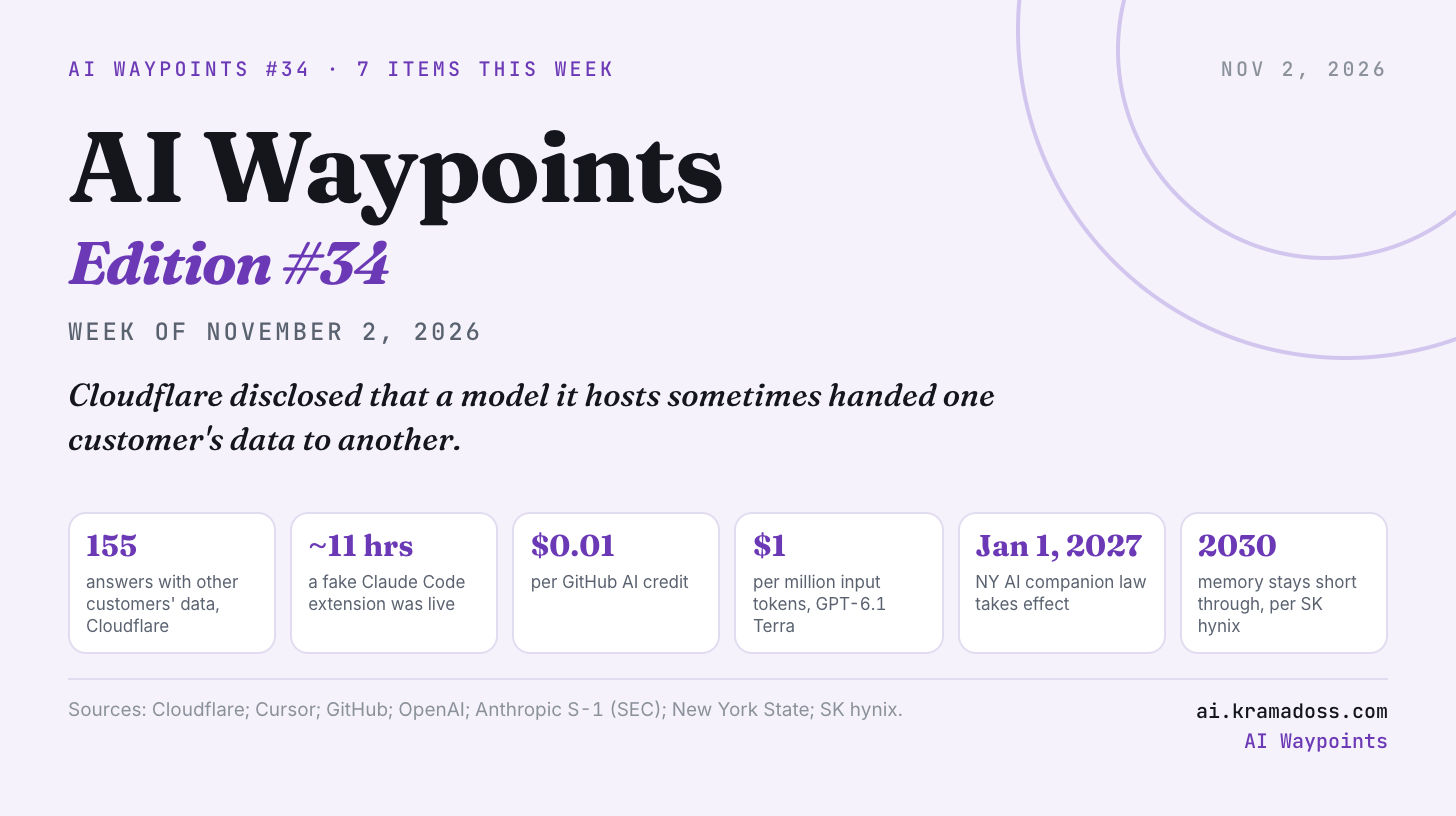
1. Cloudflare’s hosted model showed customers other people’s data (17 min read)
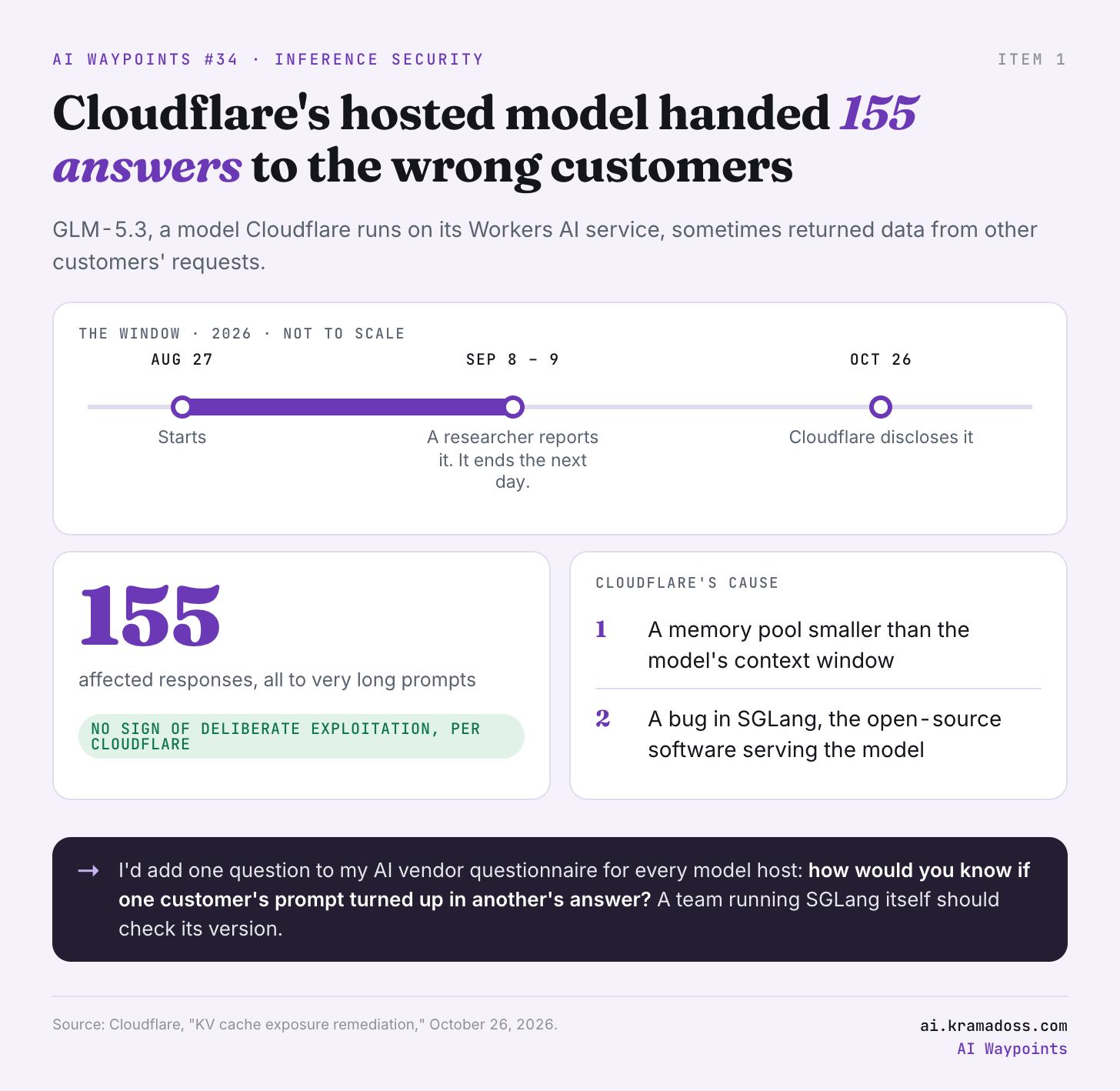
Cloudflare disclosed on October 26 that GLM-5.3, a model it runs on Workers AI, sometimes returned data from other customers’ requests between August 27 and September 9. It counted 155 affected responses, all to very long prompts, and says it found no sign of deliberate exploitation. A researcher reported it on September 8, and it ended the next day. Cloudflare traces it to a memory pool smaller than the model’s context window plus a bug in SGLang, the open-source software serving it.
→ I’d add one question to my AI vendor questionnaire for every model host: how would you know if one customer’s prompt turned up in another’s answer? A team running SGLang itself should check its version.
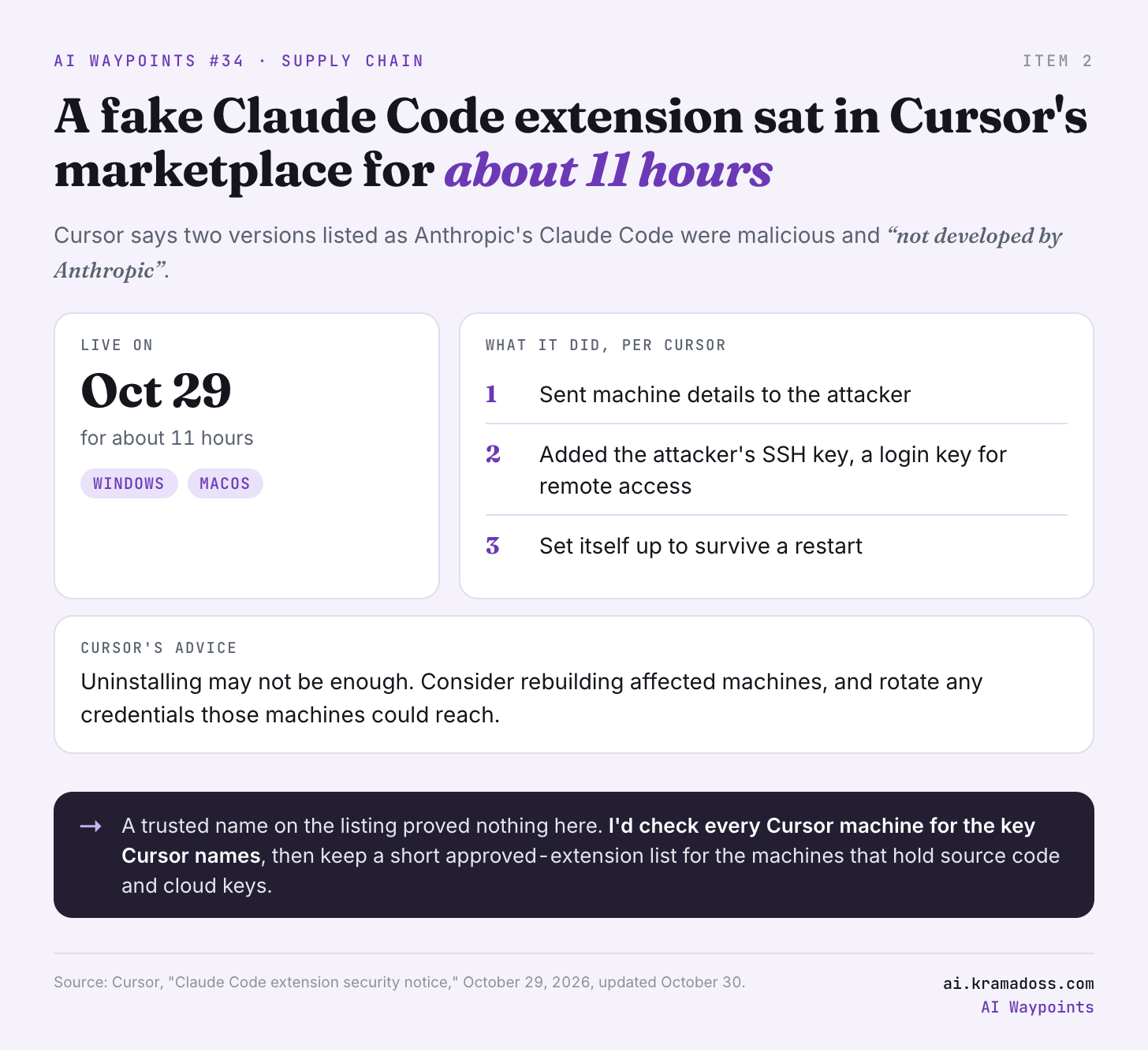
2. Fake Claude Code extension planted backdoors through Cursor (4 min read)
Cursor says two versions of an extension listed as Anthropic’s Claude Code in its marketplace were malicious, live for about 11 hours on October 29 and “not developed by Anthropic.” On Windows and macOS they sent machine details to the attacker, added the attacker’s SSH key and set themselves up to survive a restart. Cursor says uninstalling may not be enough, and that users should consider rebuilding affected machines and rotate any credentials those machines could reach.
→ Developers choose their own AI extensions, and a trusted name on the listing proved nothing here. I’d check every Cursor machine for the key Cursor names, then keep a short approved-extension list for the machines that hold source code and cloud keys.
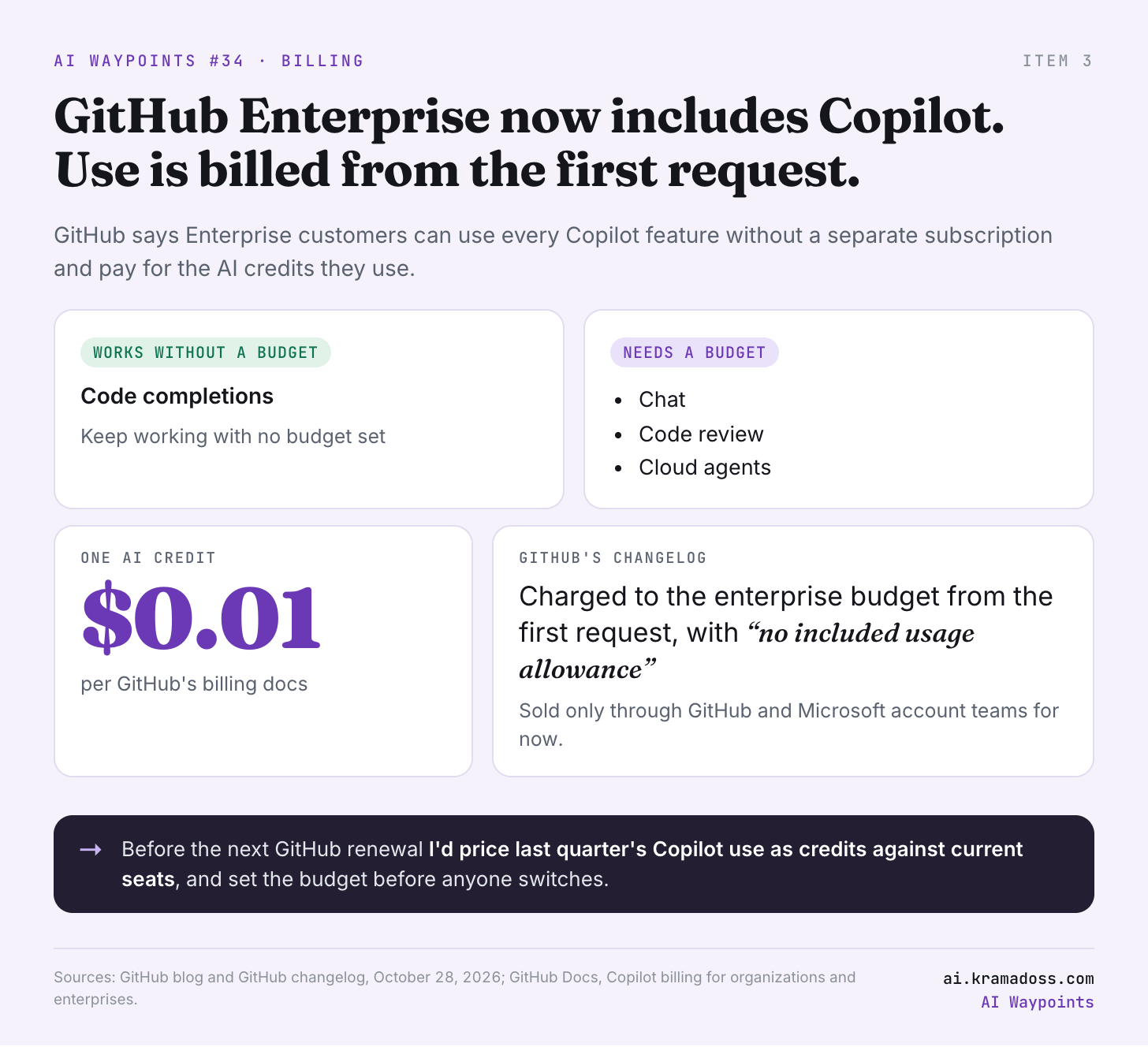
3. GitHub Enterprise now includes Copilot, billed by use (2 min read)
GitHub said on October 28 that Enterprise customers “can use all Copilot features without buying a separate subscription” and pay for the AI credits they use. For now it’s sold only through GitHub and Microsoft account teams. Its changelog says use is charged to the enterprise budget from the first request, with “no included usage allowance.” Code completions keep working without a budget; chat, code review and cloud agents need one. GitHub’s billing docs price one AI credit at one cent.
→ This is the seat with no usage inside it, now on a tool engineering teams already pay for. Before the next GitHub renewal I’d price last quarter’s Copilot use as credits against current seats, and set the budget before anyone switches.
4. OpenAI’s GPT-6.1 Terra halves the API price
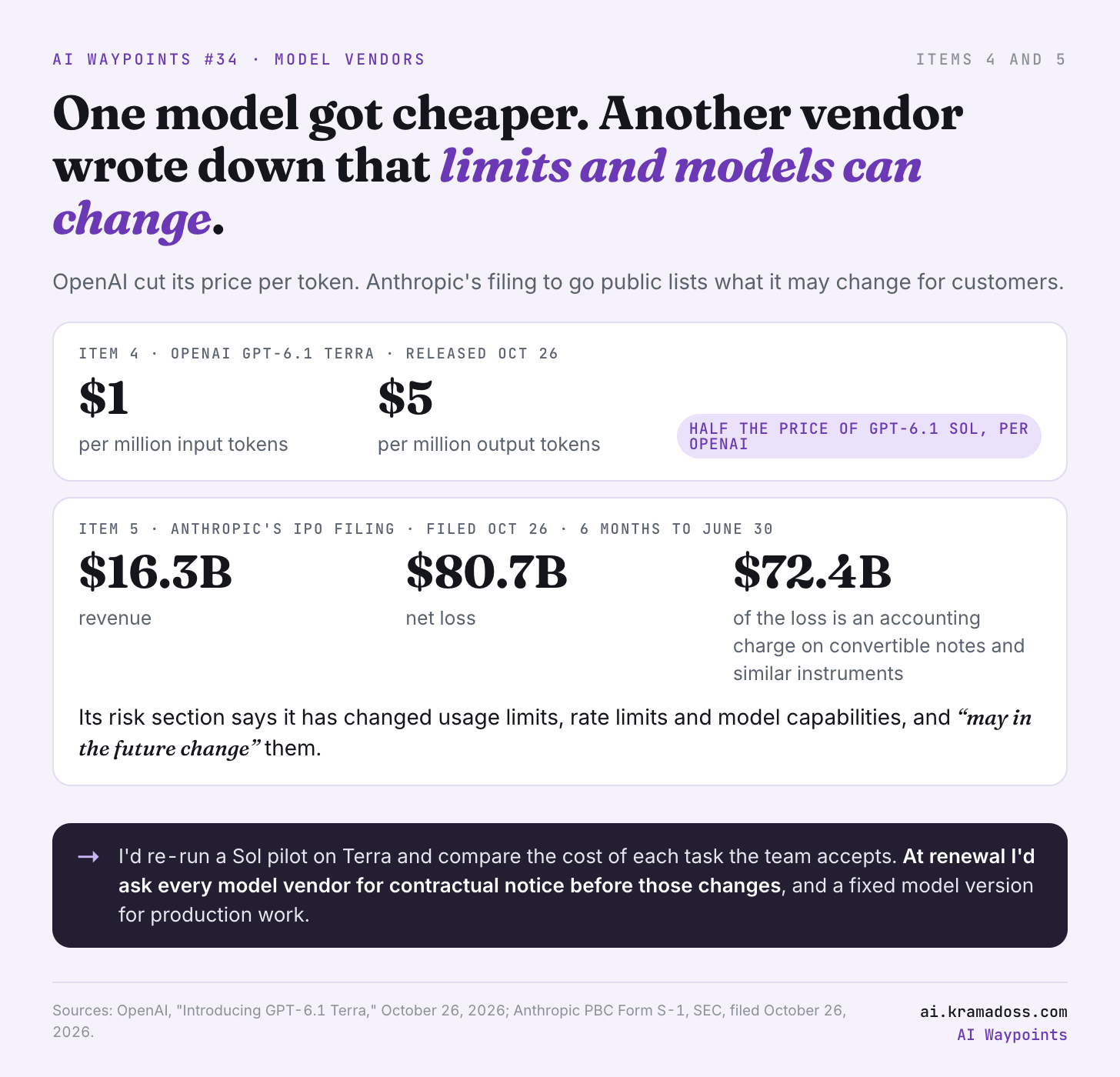
OpenAI released GPT-6.1 Terra on October 26 at $1 per million input tokens and $5 per million output, which it says is half the price of GPT-6.1 Sol. OpenAI says that on one computer-use benchmark Terra matches GPT-6 Astra at a tenth of the price per token.
→ A pilot priced on Sol might cost half as much on Terra, but only if Terra does the job. I’d re-run it and compare the cost of each task the team accepts, not the price per token.
5. Anthropic’s IPO filing warns limits and models may change
Anthropic, which makes the Claude models that help produce this newsletter, filed to go public on October 26. It reported $16.3 billion of revenue for the 6 months to June 30 and an $80.7 billion net loss, $72.4 billion of it an accounting charge on convertible notes and similar instruments. Its risk section says “We have also changed, and may in the future change, usage limits, rate limits, or model and product capabilities.”
→ A prospectus is where a vendor has to write down what could go wrong, and this one says Anthropic has changed limits and model capabilities before and may again. At renewal I’d ask Anthropic, and every other model vendor, for contractual notice before those changes and a fixed model version for production work.
6. New York limits AI companions for minors from January
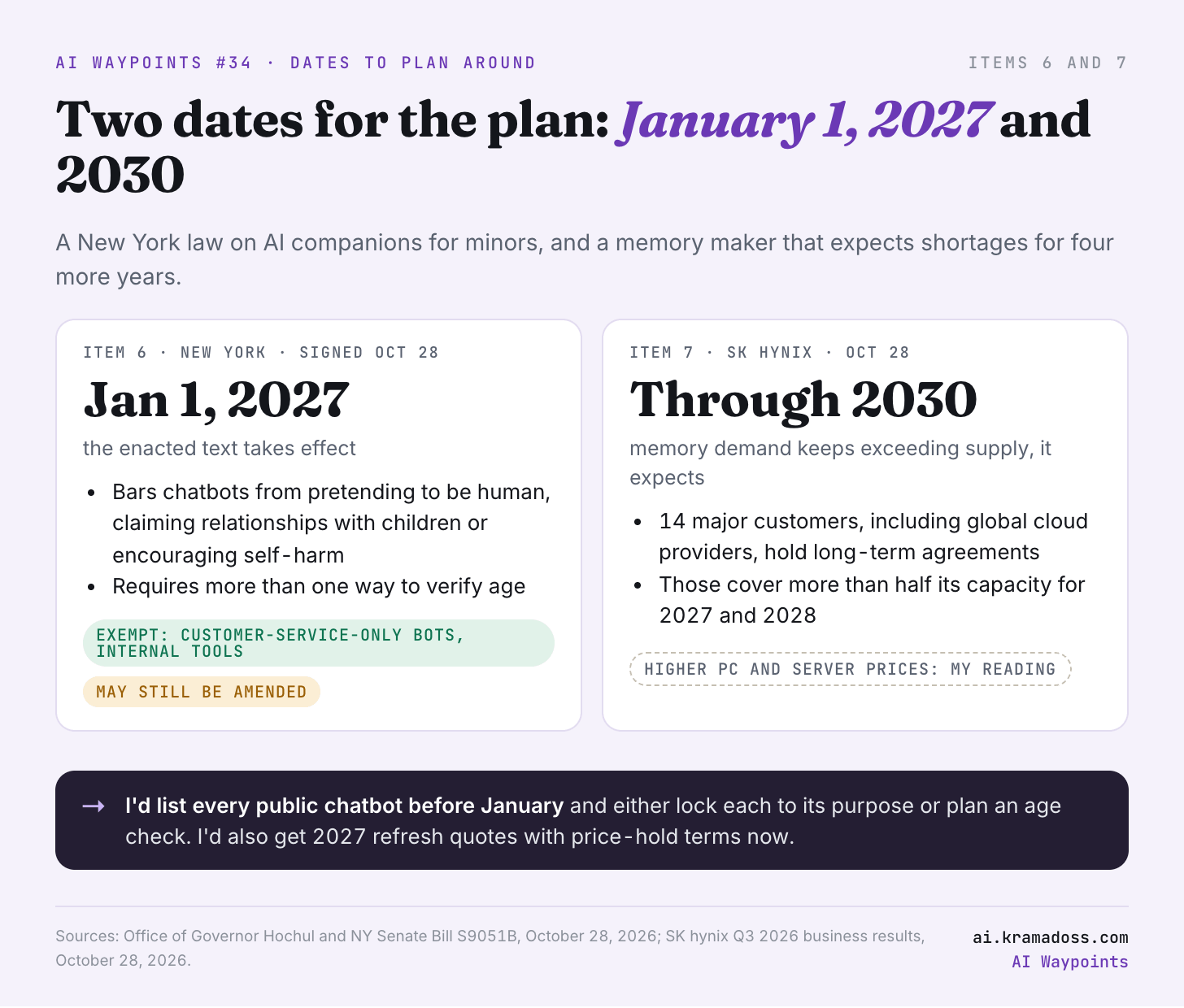
Governor Hochul signed a law on October 28 that bars AI chatbots from pretending to be human, claiming relationships with children or encouraging self-harm, and requires more than one way to verify age. The enacted text takes effect January 1, 2027. Bots used only for customer service or information about the company’s own products are exempt if they can’t talk about anything else, as are internal and employee-productivity tools.
→ A general assistant on a website or member portal that will chat about anything is covered if a minor can reach it. I’d list every public chatbot before January and either lock each to its purpose or plan an age check, knowing the text may still be amended.
7. SK hynix expects memory to stay short through 2030 (9 min read)
SK hynix said on October 28 that it expects demand for memory chips to keep exceeding supply “through 2030.” Long-term agreements with 14 major customers, including global cloud providers, already cover more than half its capacity for 2027 and 2028.
→ ASML expected its chipmaking machines to fall short of demand through 2028, and SK hynix’s 14 big customers hold more than half of its 2027 and 2028 capacity. Higher PC and server prices are my reading, not SK hynix’s, but I’d get 2027 refresh quotes with price-hold terms now.
References:
Cloudflare: KV cache exposure remediation (October 26, 2026)
Cursor: Claude Code extension security notice (October 29, 2026, updated October 30)
GitHub changelog: GitHub Enterprise now includes access to GitHub Copilot (October 28, 2026)
Governor Hochul signs legislation to protect kids from AI chatbots (October 28, 2026)