

Good morning. From December 1 Microsoft will sell Copilot to companies that don’t also buy Microsoft 365, at the same price. And ASML says its planned supply of chipmaking machines for 2027 and 2028 will not fully meet what its customers want.
Since last week I also published:
2026 Enterprise Guide for AI Control Planes (Oct Update) — the October refresh of my May guide to the tools that govern AI agents.
1. Google puts an end date on Argon’s launch price (13 min read)
On October 13 Google opened Gemini 4 Argon to developers and enterprises through its API at an introductory $2 per million tokens in and $10 out. A footnote says that period ends November 30, after which $4 and $20 apply to “the Argon model intended for public access only.” Google’s pricing page bills the model’s reasoning as output.
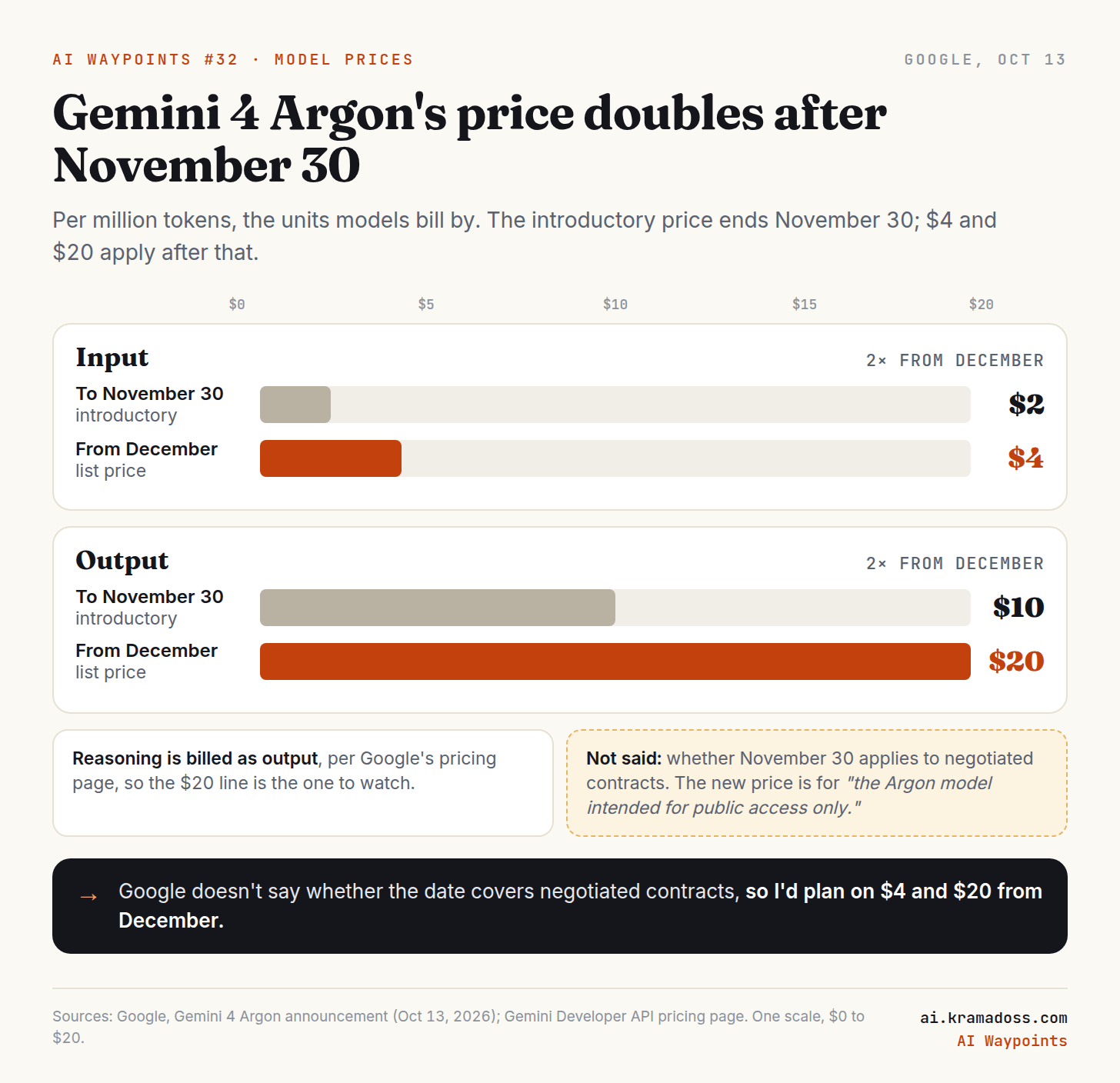
→ Google doesn’t say whether the November 30 date applies to negotiated contracts, so I’d plan on $4 and $20 from December.
2. Microsoft drops the Microsoft 365 requirement for Copilot
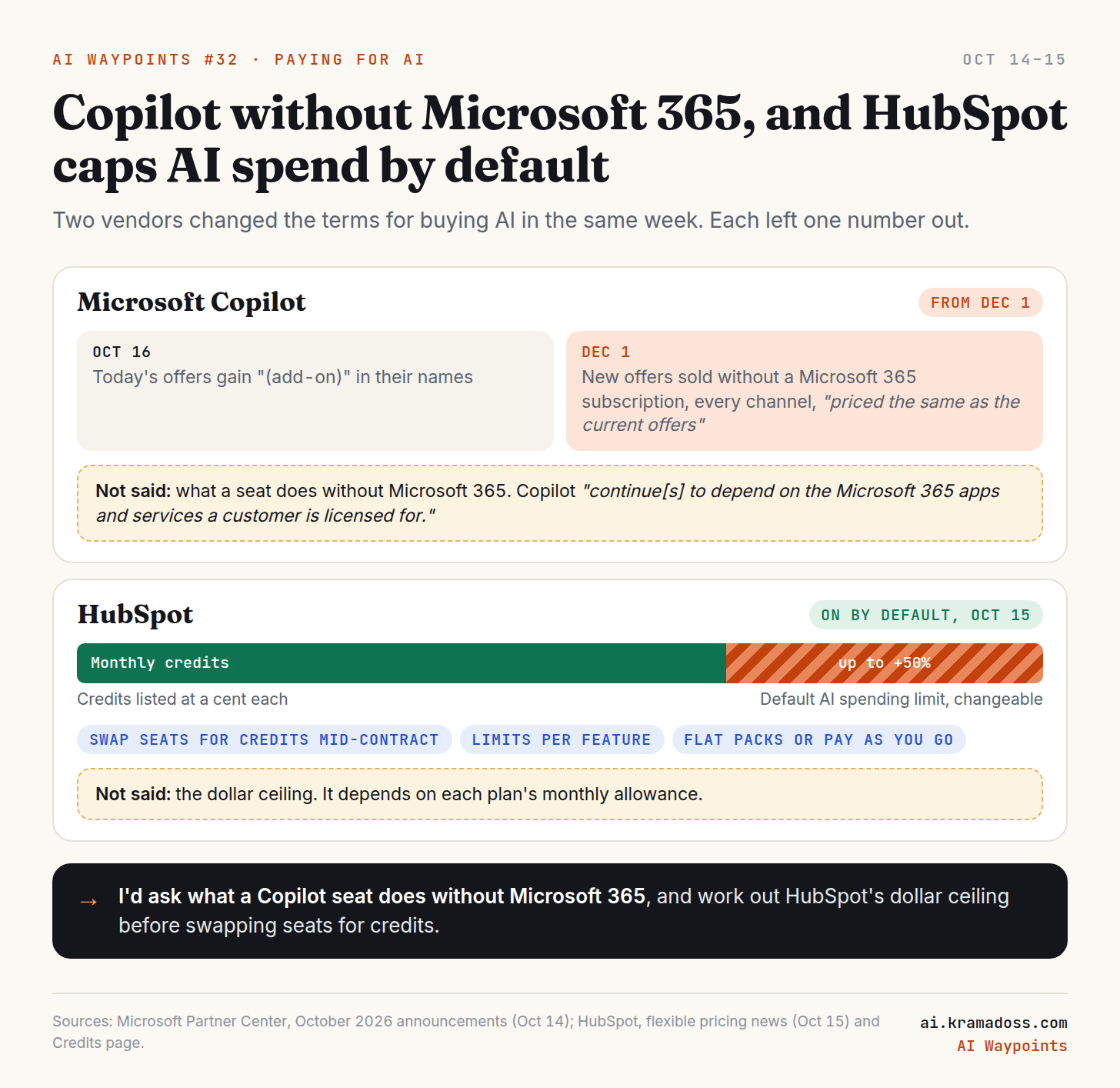
Microsoft told partners on October 14 that from December 1, new Microsoft 365 Copilot and Copilot Business offers can be bought without a Microsoft 365 subscription, in every sales channel, “priced the same as the current offers.” Today’s offers gain “(add-on)” in their names from October 16 and stop being sold to new buyers on December 1, though existing customers can still renew.
→ Microsoft says Copilot experiences “continue to depend on the Microsoft 365 apps and services a customer is licensed for.” I’d ask what a seat does without them before buying one.
3. HubSpot switches on AI spending limits by default (4 min read)
On October 15, HubSpot said it now sets each account’s AI spending limit at up to 50% above its monthly credits, the units its AI features use up, and customers can change it. Customers can also swap seats for credits mid-contract, set limits for each feature, and buy credits in flat monthly packs or pay as they go.
→ HubSpot’s credits page lists credits at a cent each, but the cap depends on each plan’s monthly allowance. I’d work out the dollar ceiling before swapping seats for credits.
4. ASML expects to fall short of demand through 2028 (8 min read)
ASML, which makes the machines chipmakers use, said on October 14 its planned supply for 2027 and 2028 “will not fully meet the demand“ of customers, which it ties to their views of how big and long-lasting AI spending will be. On its October 15 call TSMC’s CEO said demand is still higher than supply and rising component prices are hurting consumer and price-sensitive markets.
→ Neither company put a number on what this means for laptop and phone prices.
5. China proposes export controls on 23 AI technologies
China’s commerce and science ministries proposed on October 16 controlling the export of 40 more technologies, 23 of them in AI, including large models and agents. In translation, the notice exempts AI already open-sourced or published and requires registration now; comments close November 15. The ministry’s Q&A puts API calls, hosted services and lightweight on-device use of restricted models outside the control, and installing them on servers abroad inside it.
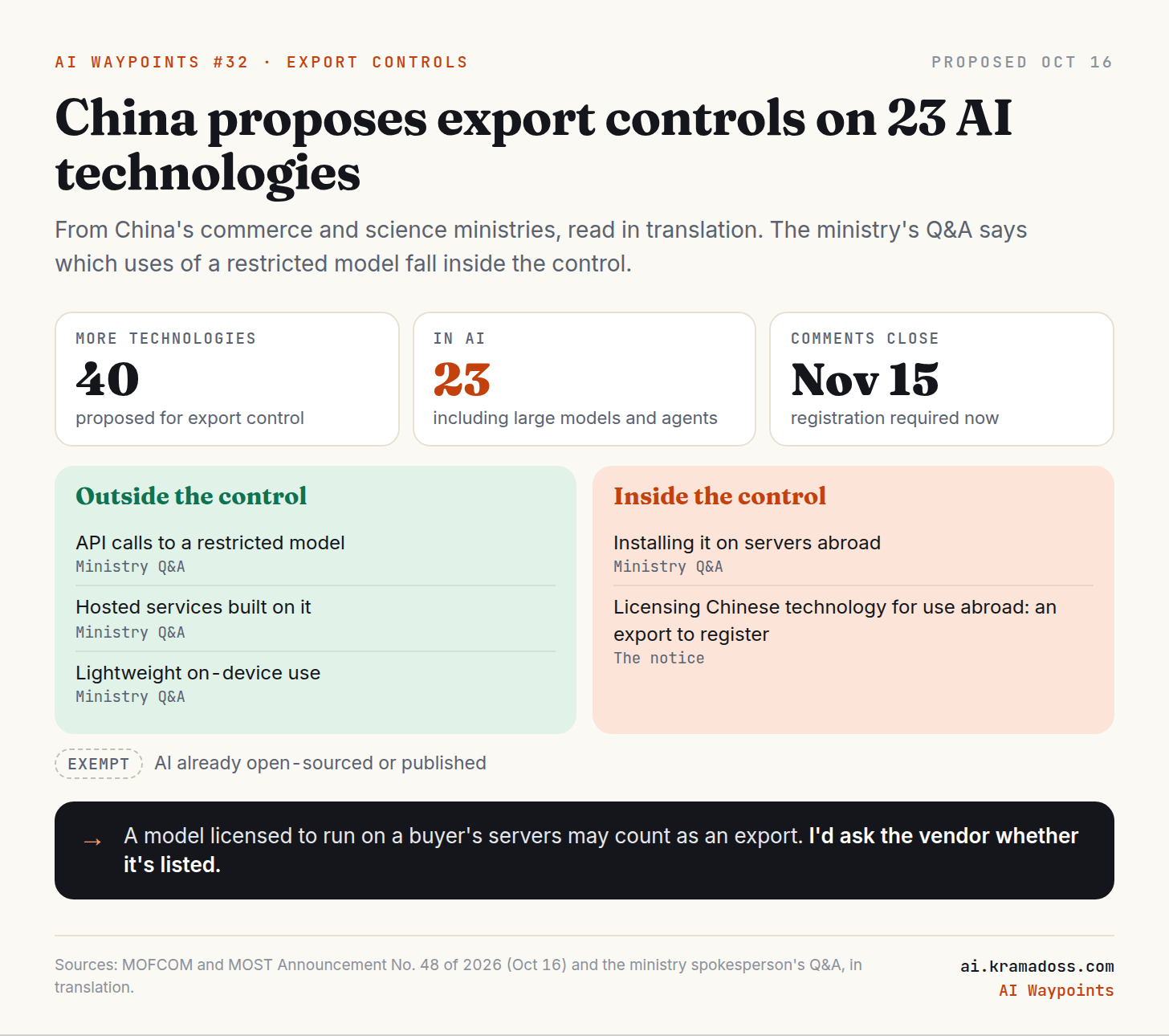
→ The notice lists licensing Chinese technology for use abroad as an export to register, so a model licensed to run on a buyer’s servers may count. Ask the vendor whether it’s listed.
6. Five Fed districts hear of slower hiring after AI (7 min read)
The Beige Book, the Fed’s roundup of what businesses in its 12 districts report, said on October 14 that most districts saw little net change in jobs, but in five some firms had not replaced people who left, delayed hiring, or expected fewer jobs after AI made them more productive. It summarizes contacts’ comments collected by October 5, “not a commentary on the views of Federal Reserve officials.”
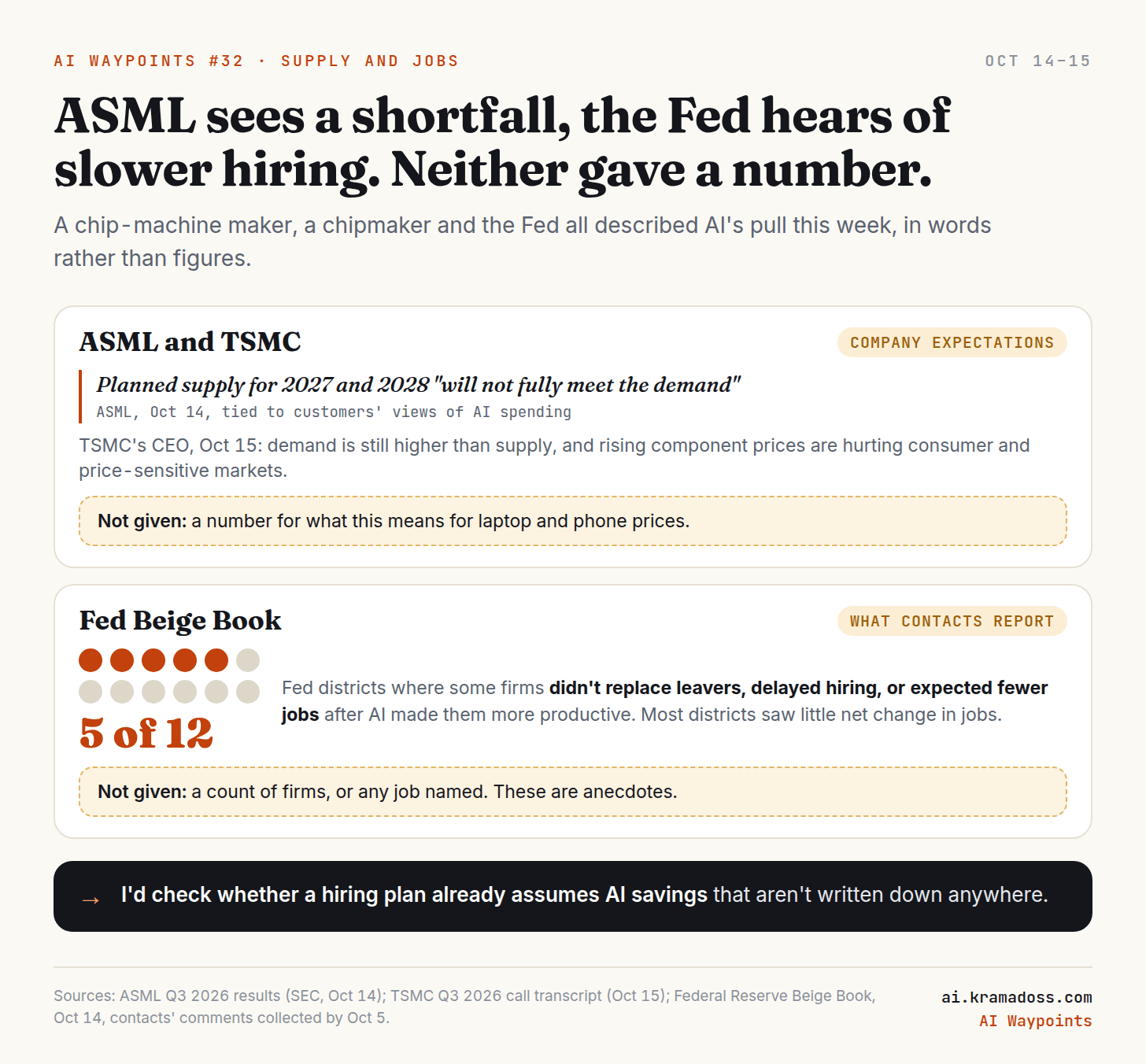
→ These are anecdotes, with no count of firms and no jobs named. I’d check whether a hiring plan already assumes AI savings that aren’t written down anywhere.
7. Official MCP code samples could mix up users’ responses (2 min read)
On October 15 the maintainers of the official TypeScript kit for MCP, the standard agents use to connect to tools and data, said a server reached over the web could send one client’s responses to another when clients shared one server instance, as the kit’s own examples did. After upgrading, such apps fail until their code changes, and a second fix, against one request using up a server’s memory, ships switched off.
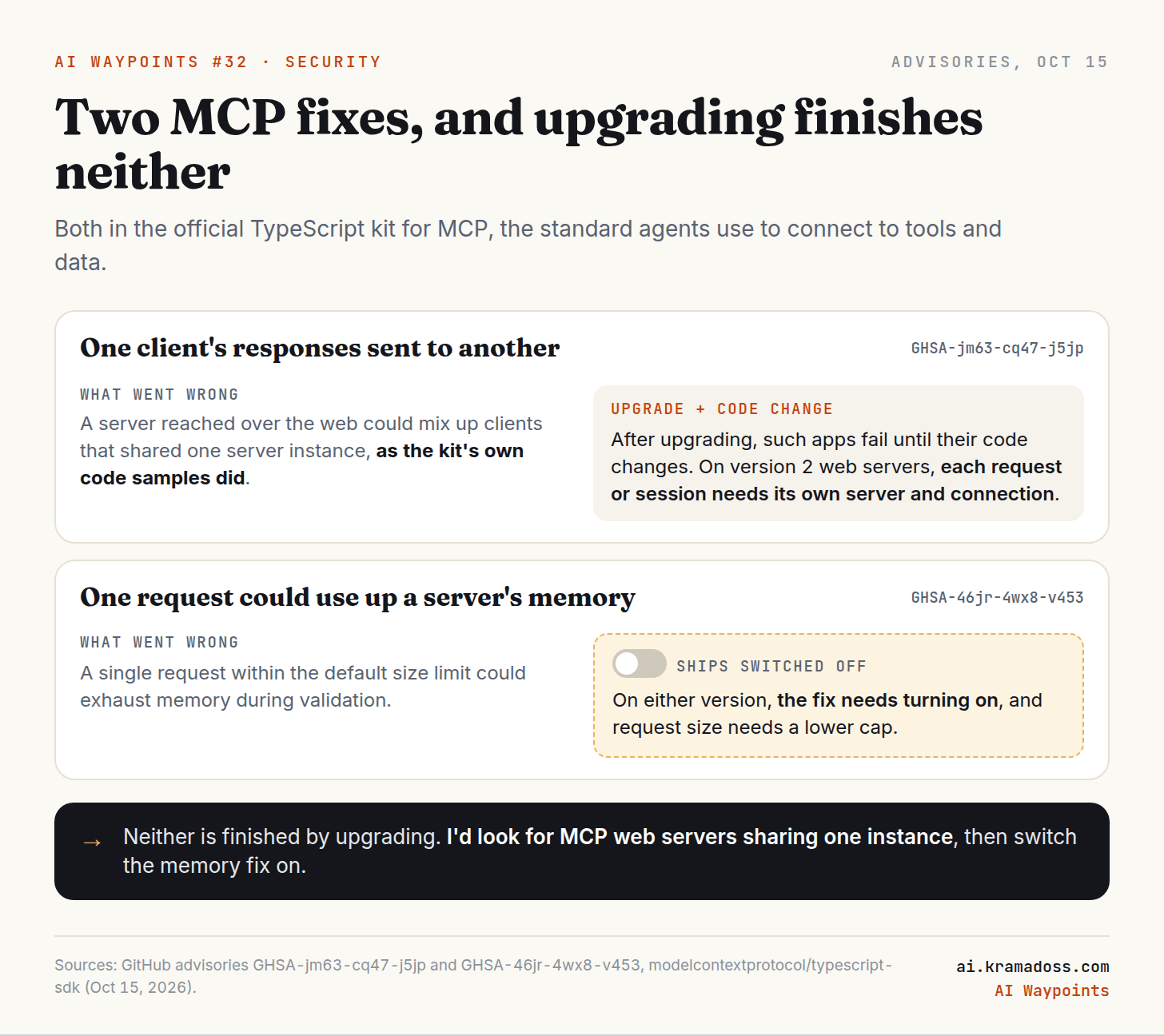
→ On version 2 web servers, each request or session needs its own server and connection. On either version, that second fix needs turning on, and request size needs a lower cap.
References: