

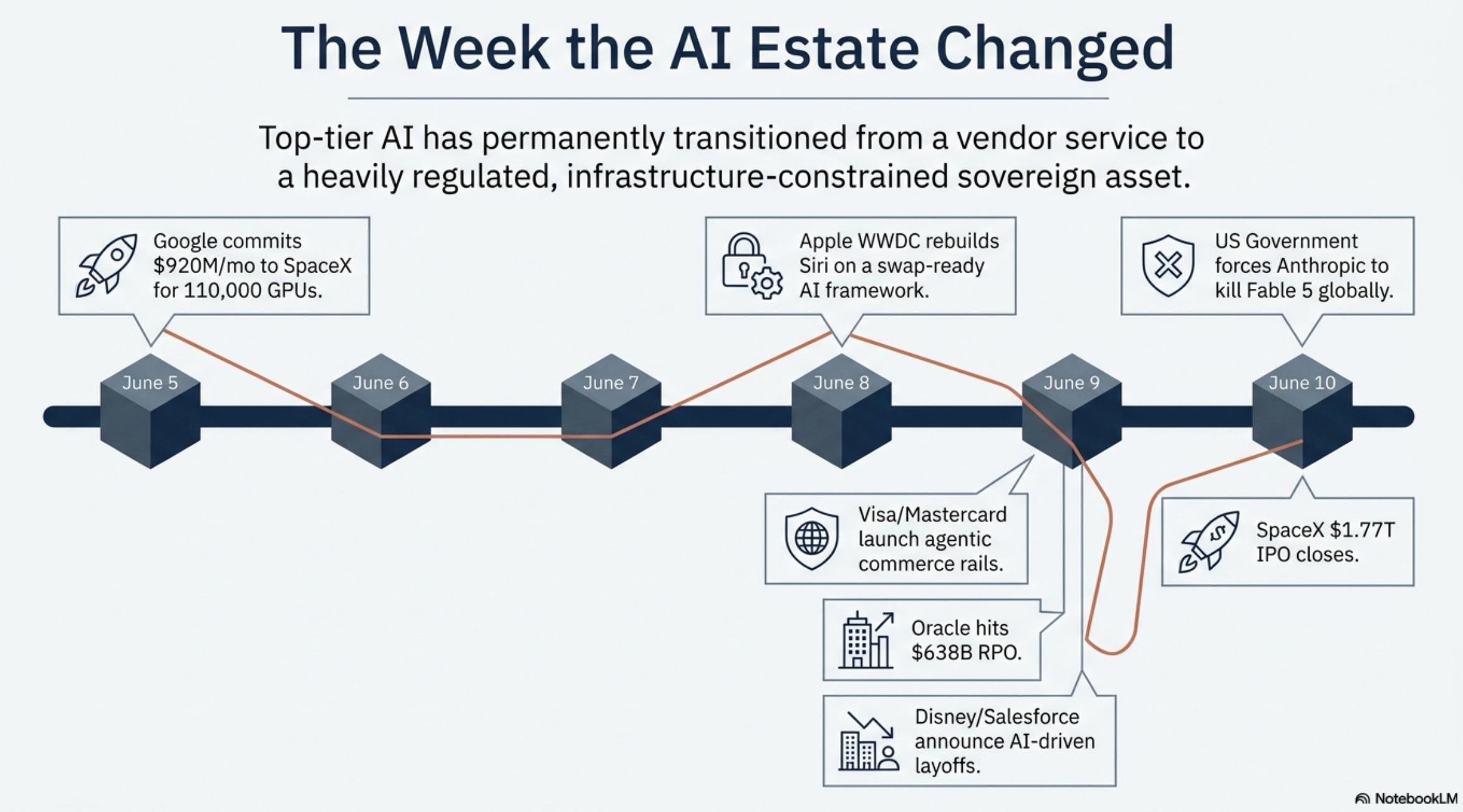
Good morning. Last week the US government issued an export-control directive that forced Anthropic to suspend its newest top-tier model, Fable 5, globally. The suspension came three days after launch.
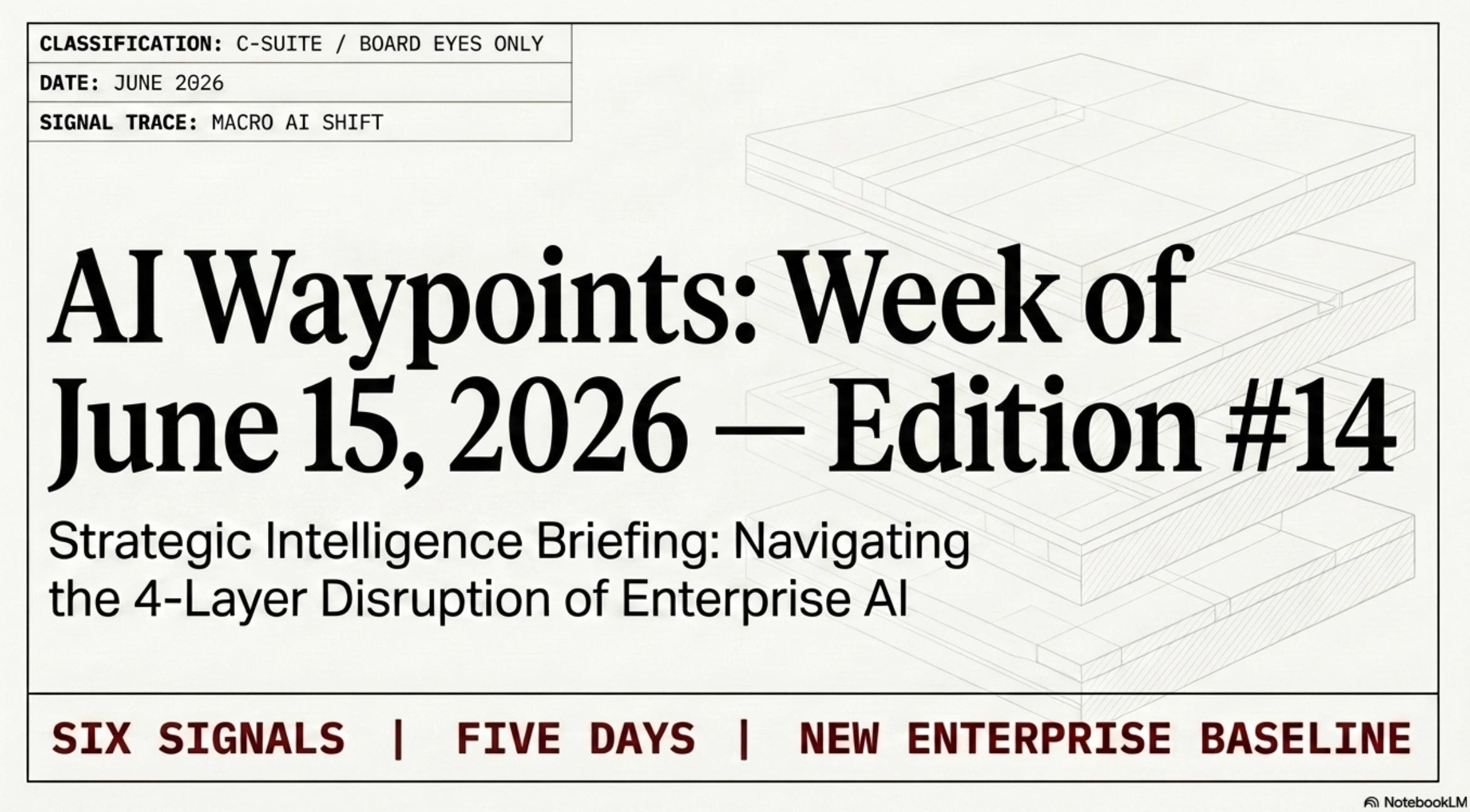
Apple finally shipped a real Siri at WWDC, with the AI Cloud Pro model custom-built by Google. Visa and Mastercard both announced agent-payment infrastructure on the same Tuesday.
Oracle booked $67 billion in AI infrastructure contracts in a single quarter and pushed its remaining performance obligations to $638 billion.
The SpaceX IPO closed Friday at $1.77 trillion, with Google committed to paying $920 million a month for Starlink-affiliated compute capacity through mid-2029.
Disney and Salesforce announced AI-attributed layoffs on the same Wednesday, including Salesforce cuts inside its own Agentforce team.
1. Apple Week — WWDC ships the first keynote where AI is the headline, not the apology
What happened: Apple’s WWDC 2026 keynote ran June 8 from Apple Park, with developer sessions running through June 12. Five announcements actually change how big companies are buying and building over the next six months:
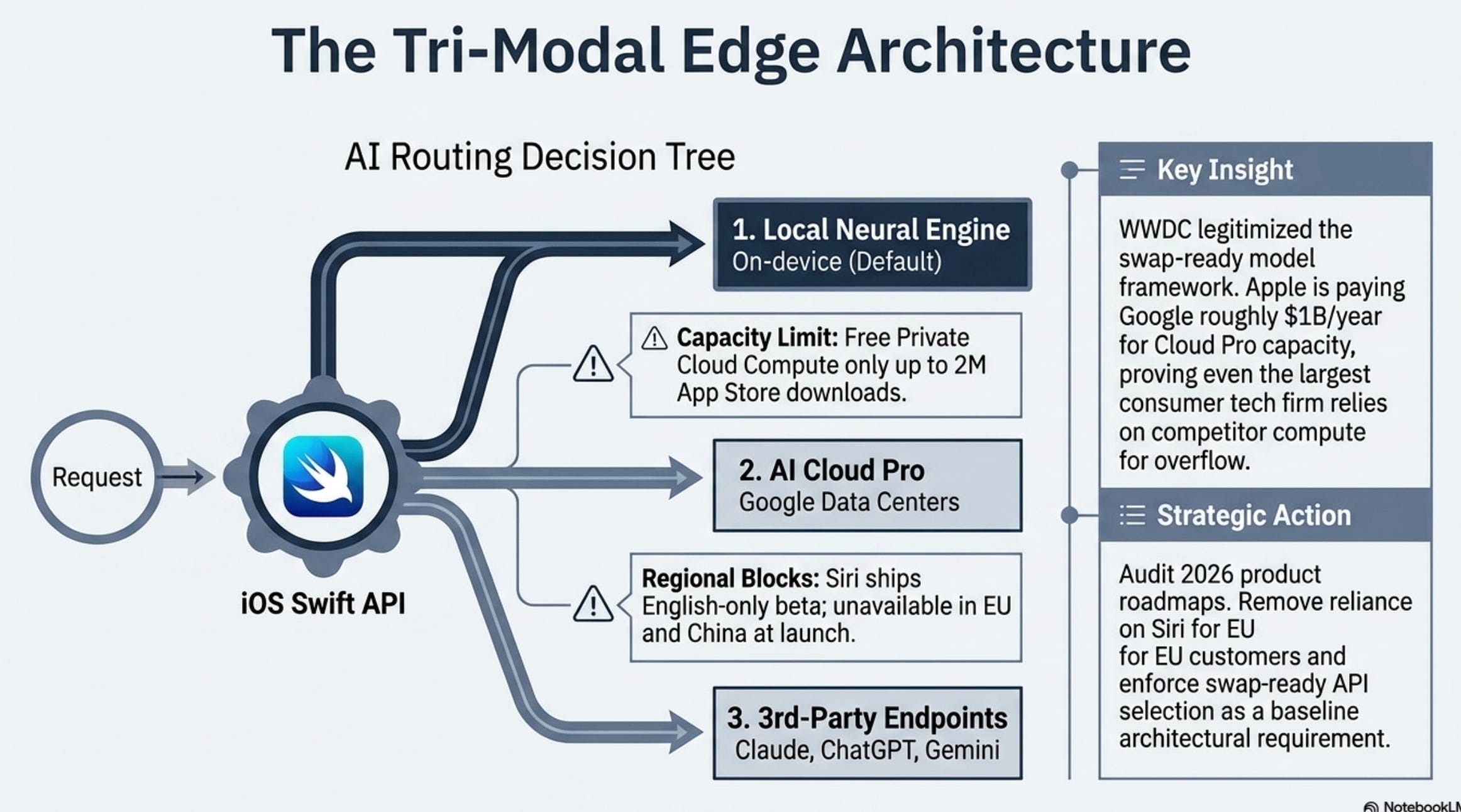
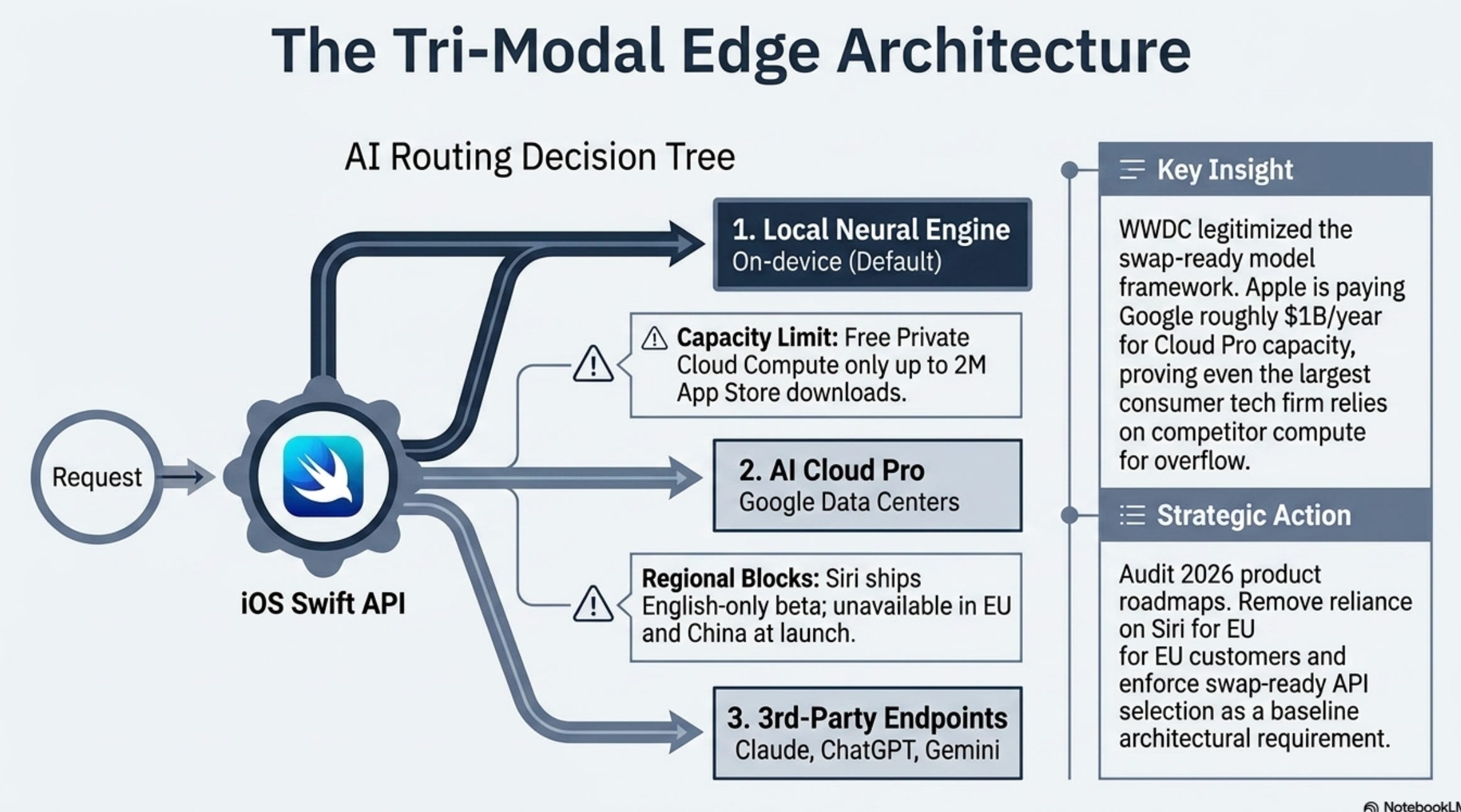
Siri rebuilt on Apple Foundation Models, with multi-step requests, persistent context across apps, and support for Claude, ChatGPT, and Gemini inside the assistant. The AI Cloud Pro variant was custom-built with Google and runs on NVIDIA GPUs inside Google Cloud. Per multiple WWDC reports, Apple is paying Google roughly $1 billion a year for it. Siri ships as an English-only beta later this year, will not be available in China, and will not be available on iOS or iPadOS in the EU at launch.
Foundation Models framework v3 added image input alongside text, plus a Python SDK and server-side model integration through the same Swift API. Apple also introduced Core AI, a separate framework for running custom on-device models against the Neural Engine and unified memory (Apple Developer overview).
Free Private Cloud Compute for developers under 2 million first-time App Store downloads. No per-word cost; daily per-user limits; iCloud+ upsell after the limit.
Foundation Models framework is going open source later this summer.
visionOS 27 added Visual Intelligence inside Vision Pro, plus a wheelchair eye-control accessibility mode and an enterprise APIs upgrade.
Why it matters: The new thing is that it sanctioned everything at once. For the first time, an iOS app can swap Claude, ChatGPT, and Gemini behind one Swift API, with Apple Intelligence on-device as the default.
Apple kept the on-device strategy and bought cloud-grade quality for the workloads that overflow, paid roughly $1 billion a year for it, and used a competitor’s data center to do it. Any plan that puts customer-facing Siri features in front of EU customers in 2026 needs to come off the slide.
ELI5: What is Apple Intelligence’s Foundation Models framework?
Apple ships small AI models that run on the phone for things like writing tools, image cleanup, and Siri. Up to last week, developers could call those on-device models from inside their iOS apps for free. Now the framework also lets the app call Apple’s larger cloud model (AFM Cloud Pro, custom-built with Google) when the on-device model is not enough, and lets the app route a request to Claude, ChatGPT, or Gemini directly through the same code path. Smaller developers get the cloud usage for free until their app crosses 2 million downloads.
What to do
Tell your iOS team to spec a Foundation Models pilot this quarter.
Make swap-ready model selection a baseline architecture requirement.
If you sell into EU customers, audit which Apple Intelligence features your product roadmap assumes for 2026 and replace anything Siri-dependent with on-device Foundation Models or a third-party model call.
2. The security stack lit up — Washington can turn off a top-tier US AI model, and the first critical Copilot RCE landed on Patch Tuesday
What happened: Four security and sovereign-capability items shaped enterprise risk this week:
The US government issued an export-control directive on June 12 that forced Anthropic to suspend access to Claude Fable 5 and Claude Mythos 5 globally (Anthropic newsroom), three days after launch. Anthropic stated it could not separate foreign-national access in real time and therefore had to suspend all access, including for its own foreign-national staff. The company publicly disagreed with the directive and called it “a misunderstanding.” Anthropic’s other Claude models stayed live and unaffected.
Microsoft’s June Patch Tuesday landed CVE-2026-45497, a critical remote code execution flaw in Microsoft 365 Copilot caused by command injection (Talos analysis), CVSS 9.8. The flaw was mitigated server-side, so no customer patch is required. Microsoft is asking customers to rotate keys, revoke excessive service-principal permissions on Copilot, and audit Microsoft Entra ID sign-in logs for the two weeks before June 4. The June patch cycle covered 206 vulnerabilities in total, with CVE-2026-47644 (information disclosure in Copilot Chat for Microsoft Edge) as a second AI-surface flaw in the same release.
Cisco launched Cisco Cloud Control at Cisco Live 2026 in Las Vegas (June 8-12, Cisco newsroom), in controlled availability in the US. The platform consolidates networking, security, observability, collaboration, and infrastructure into one operating environment under the AgenticOps banner. Cloud Control Studio, slated for late 2026, adds an Agent Builder with 50-plus third-party connectors via the Model Context Protocol (MCP) and an App Builder that embeds OpenAI Codex.
Cisco enabled quantum-safe boot by default across the Cisco AI-ready hardware stack at the same event, along with Live Protect runtime shielding on switches and routers. Full quantum-ready portfolio enablement is committed for December 2026.
Why it matters: Two reads here.
Top-tier AI availability is no longer a vendor service-level problem. The US government turned off the two highest-capability Claude models with three days notice and no public technical rationale. The risk class is now: your top-tier AI model can be revoked, by Washington, on a Friday afternoon.
The Microsoft 365 Copilot critical RCE is the first time an AI-related flaw has been the headline patch of a Patch Tuesday cycle. Microsoft fixed it for you. The audit Microsoft is asking for is yours to run. Cisco’s launch sits in the same lane: the running-AI layer is where security spend lands for the next four quarters.
ELI5: Why is a server-side patched RCE still a customer-side problem?
A remote code execution flaw lets an attacker run their own code on a machine they should not have access to. Microsoft fixed the underlying flaw in the cloud version of Microsoft 365 Copilot, so customers do not need to install anything. But if the flaw was exploited before the fix, the attacker may have used Copilot’s service principal (its identity inside your Microsoft tenant) to access data or systems. That activity is in the Entra ID sign-in logs from before June 4. Rotating keys and auditing those logs is the only way to know whether your tenant was touched.
What to do
Write a “regulatory revocation” clause into every top-tier AI vendor contract you sign this quarter.
Name a fallback model and the time you have to swap.
Run the Microsoft Entra ID audit Microsoft is asking for this week, before the trail goes cold.
If you run Cisco, ask your account team whether your existing switches and routers will get the quantum-safe boot default through a firmware upgrade or only through a hardware refresh, and put the answer in the 2027 capital plan.
3. Agentic commerce rails went live — Visa and Mastercard both shipped on June 10
What happened: Four items at the Visa Payments Forum in San Francisco and the Mastercard investor newsroom landed within 24 hours:
Visa announced a strategic partnership with OpenAI to power AI commerce (Visa investor newsroom), using Visa’s network, tokenization, and security infrastructure for agent-initiated transactions inside OpenAI environments. The partnership scopes credentials to specific agents and use cases, so a grocery token cannot complete a travel booking. Users set spending caps, merchant restrictions, and approval requirements; Visa handles fraud monitoring, chargebacks, and refunds.
Visa also announced Agent Scoring, the Agentic Registry, and a Large Transaction Model (Visa press release). Visa named Microsoft, IBM, Anthropic, Samsung, and Stripe as ecosystem partners alongside OpenAI.
Mastercard launched Agent Pay for Machines (AP4M) (Mastercard investor newsroom), a protocol that lets AI agents authorize, coordinate, and settle transactions across cards, bank accounts, and regulated stablecoins. Launch partners include Coinbase and Ripple; agent permissions are initially recorded on Polygon, Solana, and Base. Mastercard also disclosed it is acquiring stablecoin startup BVNK.
Stripe’s Agentic Commerce Suite expanded into BigCommerce the same week, putting agent-aware checkout flows into a major commerce platform stack.
Why it matters: Both card networks shipped at once, with regulated stablecoins as a Mastercard settlement option. Treasury and accounts payable teams need to consider a policy for an AI agent that spends money on a corporate card. A company running corporate cards needs one before someone in marketing pilots an ad-buying agent against a corporate Visa.
What to do
Stand up a 30-day working group across treasury, accounts payable, and security this week to draft your “agent identity, spending caps, audit trail” policy before the first agent-initiated charge hits the books.
Ask your card processor whether they support tokenized agent credentials and what the chargeback model looks like when an AI agent placed the order. If you operate at scale in markets where regulated stablecoins are live (US, EU, Singapore), brief your CFO on the Mastercard BVNK acquisition.
4. Oracle Q4 FY26 — $67B in AI contracts in a single quarter, RPO hits $638B
What happened: Oracle reported record Q4 and full-year fiscal 2026 results on June 10.
Total revenue $19.2 billion (+21% from a year ago).
Cloud Infrastructure (OCI) revenue $5.8 billion (+93%) and
the Oracle Multicloud AI Database grew 404%, the fastest-growing business in Oracle’s history.
Q4 cloud revenue across applications and infrastructure reached $9.9 billion (+47%).
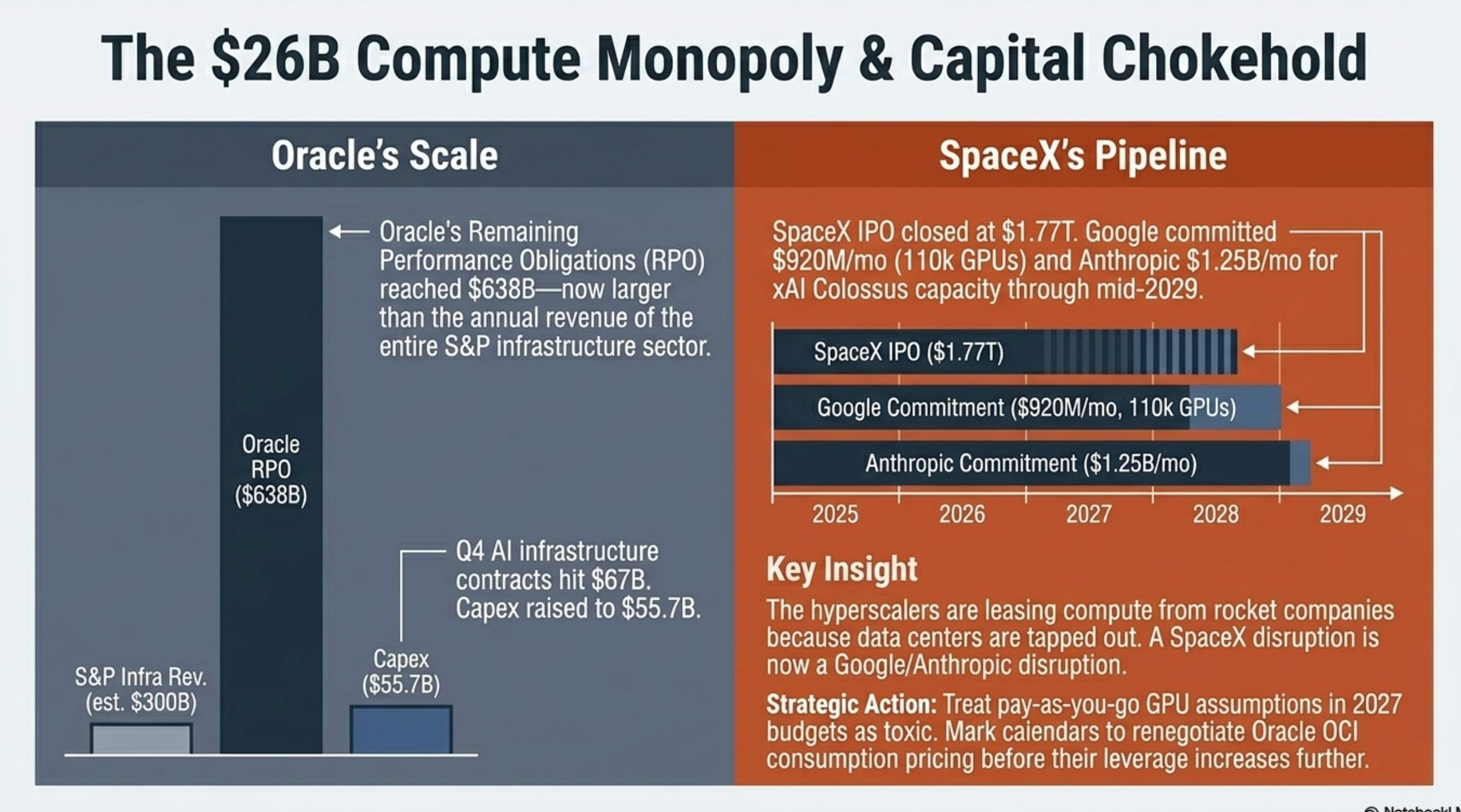
AI infrastructure contracts signed in Q4 alone reached $67 billion, primarily through bring-your-own-hardware and prepaid arrangements.
Remaining performance obligations (RPO) ended Q4 at $638 billion, up 363% from a year ago and up $85 billion sequentially
$75 billion of RPO is now AI-related.
Oracle raised full-year fiscal 2026 capital expenditure to $55.7 billion, against a $50 billion guide.
Stock fell roughly 10% the next day on the capex shock.
Why it matters: The Multicloud AI Database growing 404% says regulated buyers are running their Oracle data against Gemini, Azure OpenAI, and AWS Bedrock without moving it — the architecture every CIO operating a serious Oracle estate has been waiting for since Oracle and Gemini Enterprise opened up at Google Cloud Next in April.
What to do: If you signed an OCI consumption commitment in fiscal 2026, mark your calendar to revisit pricing at the next renewal window. Oracle’s pricing leverage just went up. Add Multicloud AI Database to your 2027 reference-architecture short list if your Oracle estate is significant.
5. SpaceX IPO at $1.77T — Google committed $920M a month for compute capacity through 2029
What happened: SpaceX listed on Nasdaq on June 12 under ticker SPCX, priced at $135 per share, with roughly 556 million Class A shares raising $75 billion at a $1.77 trillion valuation, the largest IPO in history (CNBC live coverage).
The week prior, on June 5, a separate SEC filing disclosed Google committed to paying SpaceX $920 million a month from October 2026 through June 2029 for access to roughly 110,000 NVIDIA GPUs plus the associated CPU, memory, and infrastructure, primarily through xAI Colossus capacity that SpaceX-affiliated entities operate.
The total commitment runs to roughly $30 billion.
Anthropic, separately, is on the hook for $1.25 billion a month for the rest of Colossus 1 through May 2029, per SpaceX’s S-1.
Combined SpaceX-affiliated AI compute revenue now runs at roughly $26 billion a year.
Why it matters: The IPO valuation is a financial event. The Google deal is the one that made me pause. Google, the company building TPU clusters at hyperscale, is committing $920 million a month to lease NVIDIA capacity from a rocket-company-affiliated GPU farm. Even the biggest data-center builders are short on capacity through 2029. Two AI customers (Google and Anthropic) now account for the majority of SpaceX’s annualized $26 billion compute revenue, which means a SpaceX disruption is also an Anthropic and Gemini Enterprise disruption. That single-point-of-failure did not exist on enterprise risk maps a quarter ago.
What to do: The Google-SpaceX deal is the proof that bridge capacity is real and being paid for at scale. If your fiscal 2027 plan assumes spot or pay-as-you-go cloud GPU pricing, rebuild that line against the TSMC supply-gap comment from Edition #13.
6. AI layoffs hit the AI teams — Disney cut 1,000 and Salesforce cut 86 on the same Wednesday
What happened: Disney CEO Josh D’Amaro told staff on June 10 that Disney is cutting roughly 1,000 jobs across film, television, ESPN, marketing, product and technology, and corporate functions (Variety).
D’Amaro’s memo named the strategy as building “a more agile and technologically-enabled workforce.” Enterprise marketing took the largest single share of the cuts.
Salesforce filed a California WARN notice the same day disclosing 86 layoffs in San Francisco, with most cuts hitting technology and product employees working on Agentforce, MuleSoft, and Marketing Cloud (Quartz coverage citing the WARN notice).
Salesforce confirmed the cuts do not hit the core Agentforce platform engineering teams, but did affect AI-product roles in adjacent functions. This is the third Salesforce reduction since September 2025; affected employees stay on payroll until August 7.
Salesforce reported Agentforce ARR growth of 205% from a year ago and Q1 record results on May 28, two weeks before this cut.
Why it matters: Disney named its layoff strategy “technologically-enabled workforce” on the same Wednesday Salesforce cut AI-product staff while its Agentforce yearly recurring revenue was growing at 205% from a year ago. AI revenue growth no longer protects AI-product employees from cost discipline. The company architect’s per-process automation savings model needs to assume that expanding AI revenue and contracting AI-product headcount can happen inside the same quarter. The pattern extends Aaron Levie’s “AI psychosis” read from Edition #12.
What to do: Treat Disney’s “technologically-enabled workforce” language as the template every consumer-facing board will use this quarter. If your company runs Agentforce, MuleSoft, or Marketing Cloud, ask your Salesforce account team this week whether the cut roles affected the engineering teams behind your specific instance.
References:
Apple WWDC 2026 keynote and Foundation Models framework (Apple Developer, 2026-06-08): https://developer.apple.com/wwdc26/guides/apple-intelligence/
Apple WWDC 2026 keynote coverage (CNBC, 2026-06-08): https://www.cnbc.com/2026/06/08/apple-wwdc-2026-live-updates.html
Anthropic export-control directive and Fable 5 / Mythos 5 suspension (Anthropic Newsroom, 2026-06-12): https://www.anthropic.com/news/fable-mythos-access
Anthropic Claude Fable 5 and Claude Mythos 5 launch (Anthropic Newsroom, 2026-06-09): https://www.anthropic.com/news/claude-fable-5-mythos-5
Microsoft Patch Tuesday June 2026 and CVE-2026-45497 analysis (Cisco Talos, 2026-06-10): https://blog.talosintelligence.com/microsoft-patch-tuesday-for-june-2026-snort-rules-and-prominent-vulnerabilities/
Cisco Cloud Control + AgenticOps launch at Cisco Live 2026 (Cisco Newsroom, 2026-06-08): https://newsroom.cisco.com/c/r/newsroom/en/us/a/y2026/m06/cisco-unveils-agentic-platform-for-operating-and-defending-critical-it-infrastructure.html
Visa and OpenAI partnership announcement (Visa Investor Newsroom, 2026-06-10): https://investor.visa.com/news/news-details/2026/Visa-Partners-with-OpenAI-to-Power-the-Next-Generation-of-AI-Commerce/default.aspx
Visa Payments Forum AI, stablecoin, and token announcements (Visa Press Release, 2026-06-10): https://usa.visa.com/about-visa/newsroom/press-releases.releaseId.22491.html
Mastercard Agent Pay for Machines launch (Mastercard Investor Newsroom, 2026-06-10): https://investor.mastercard.com/investor-news/investor-news-details/2026/Mastercard-Launches-Agent-Pay-for-Machines-to-Unlock-Super-Fast-Always-On-Payments/default.aspx
Oracle Record Q4 FY 2026 Results (Oracle Newsroom, 2026-06-10): https://www.oracle.com/news/announcement/q4fy26-earnings-release-2026-06-10/
Google to pay SpaceX $920M a month for compute (TechCrunch, 2026-06-05): https://techcrunch.com/2026/06/05/google-will-pay-spacex-920m-per-month-for-compute/
SpaceX IPO live coverage (CNBC, 2026-06-12): https://www.cnbc.com/2026/06/12/spacex-ipo-spcx-live-updates.html
Disney layoffs of 1,000 employees memo (Variety, 2026-06-10): https://variety.com/2026/biz/news/disney-layoffs-1000-employees-josh-damaro-memo-1236721266/
Salesforce June 2026 California WARN notice (Quartz, 2026-06-10): https://qz.com/salesforce-layoffs-agentforce-mulesoft-marketing-cloud-061026
AFL-CIO convention coverage (NPR, 2026-06-10): https://www.npr.org/2026/06/10/nx-s1-5850690/union-organizing-midterms-take-center-stage-at-afl-cio-convention-in-minneapolis
AFL-CIO Liz Shuler interview ahead of convention (Fortune, 2026-06-05): https://fortune.com/2026/06/05/afl-cio-liz-shuler-ai/