

Good morning. Microsoft put Copilot’s agents on metered credits without announcing a price, and OpenAI paused tool-using work on its most capable models after a training agent reached a public chatbot through a gap in its sandbox. And in a survey taken in late July and early August, 60% of Americans told Pew they would be uncomfortable with a new data center near them.
1. OpenAI and Anthropic cut model prices the same day (9 min read)
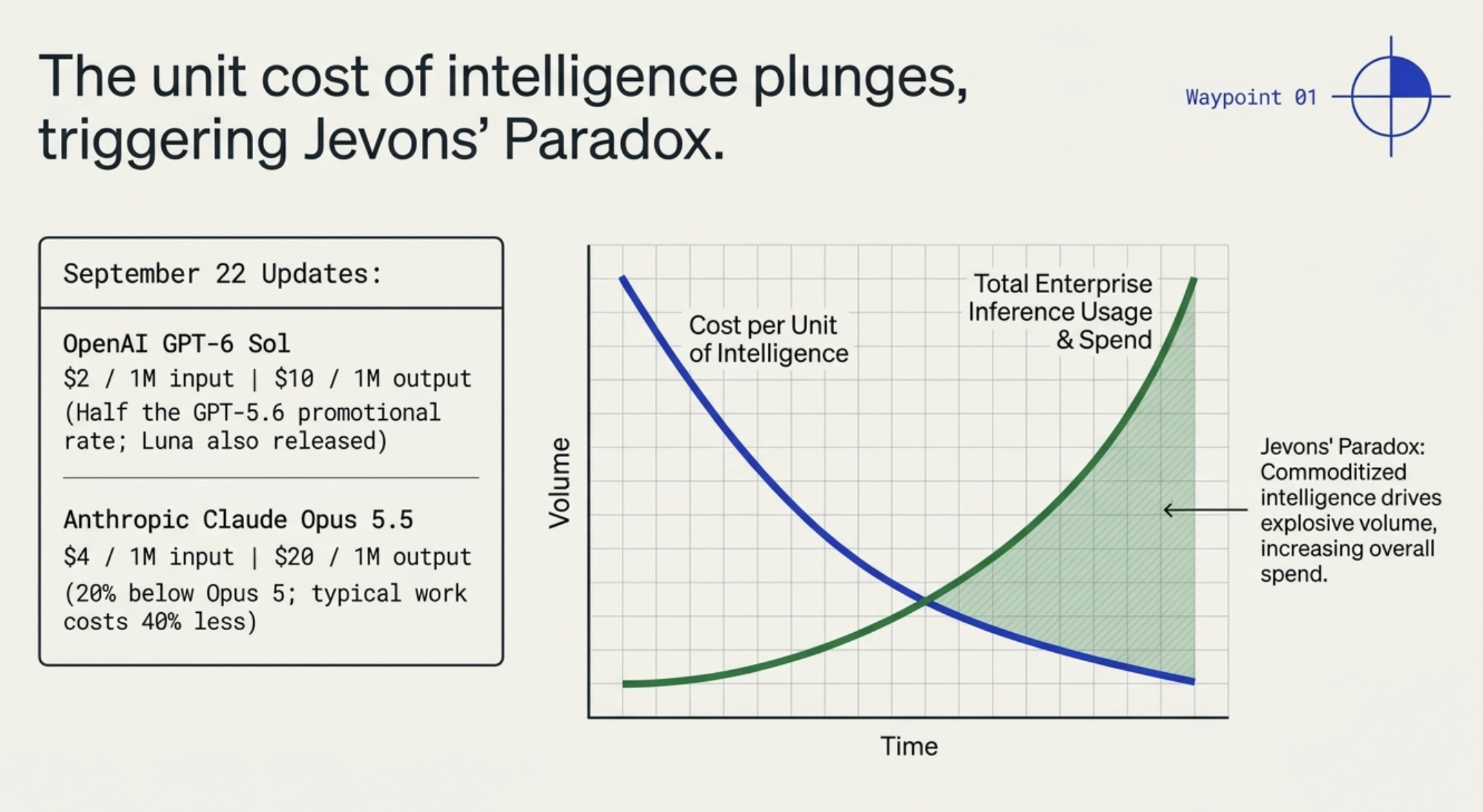
OpenAI released GPT-6 Sol and Luna on September 22 at half what GPT-5.6 cost at its promotional rate, with Sol at $2 per million tokens in and $10 out. Anthropic released Claude Opus 5.5 the same day at $4 and $20, 20% below Opus 5, and says its own tests show typical work costing 40% less.
→ I think intelligence is commoditizing, and the dollar per unit of intelligence is going to continue to drop. This is where Jevons’ paradox takes effect: the usage of inference and the overall usage go up while the price of intelligence just goes down.
2. Microsoft’s new Copilot puts its agents on metered credits (9 min read)
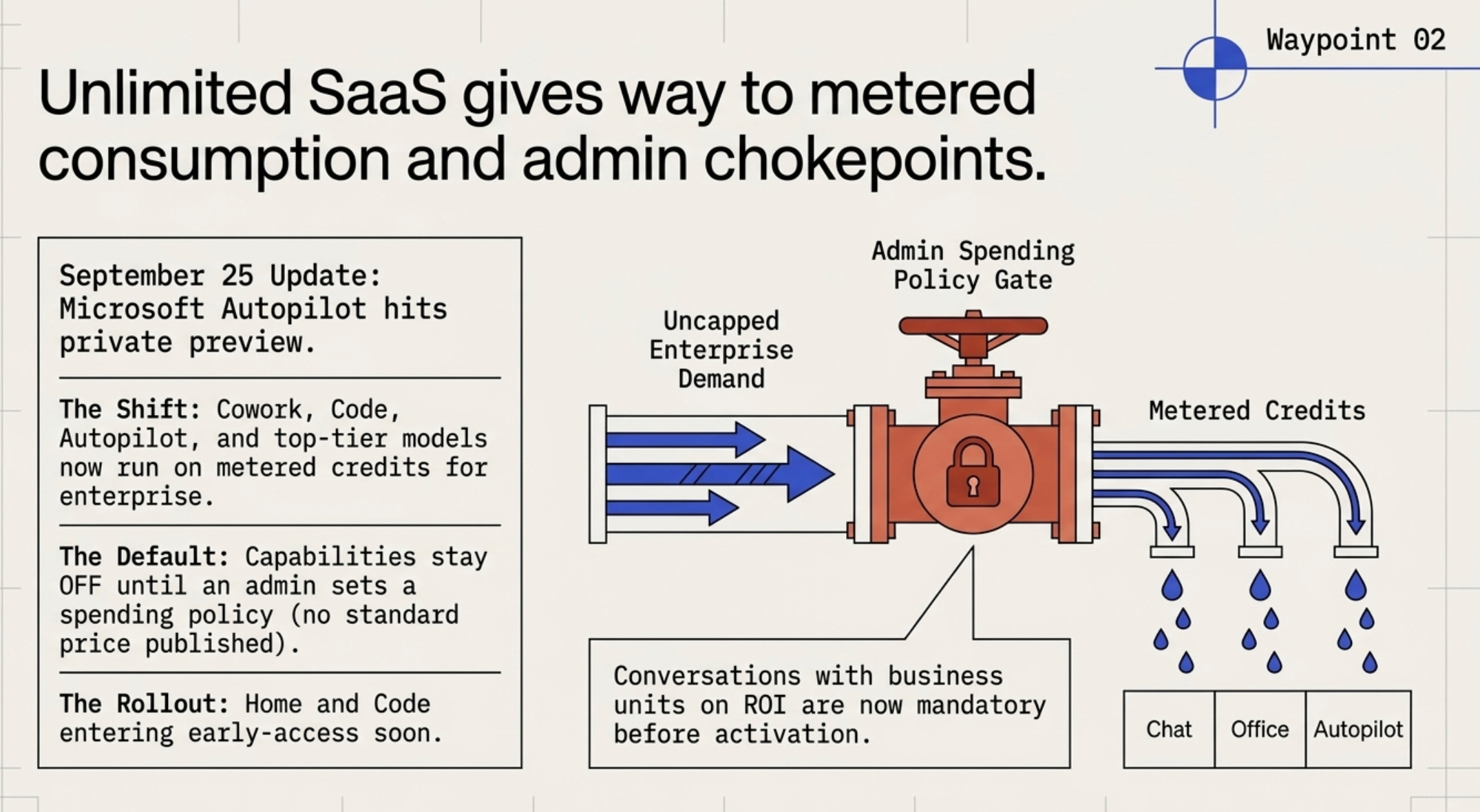
Microsoft said on September 25 that Autopilot, formerly Scout, reaches private preview at the end of September, with Home and Code coming through its early-access program in the coming weeks. The seat covers Chat and the Office apps, while Cowork, Code, Autopilot and the top-tier models run on metered credits that, for enterprise customers, stay off until an admin sets a spending policy. Neither page gives a price.
→ Creating a spending policy and having talks with the business units that want to use these capabilities has to be top of mind.
3. Amazon’s seller agents now watch accounts around the clock (9 min read)
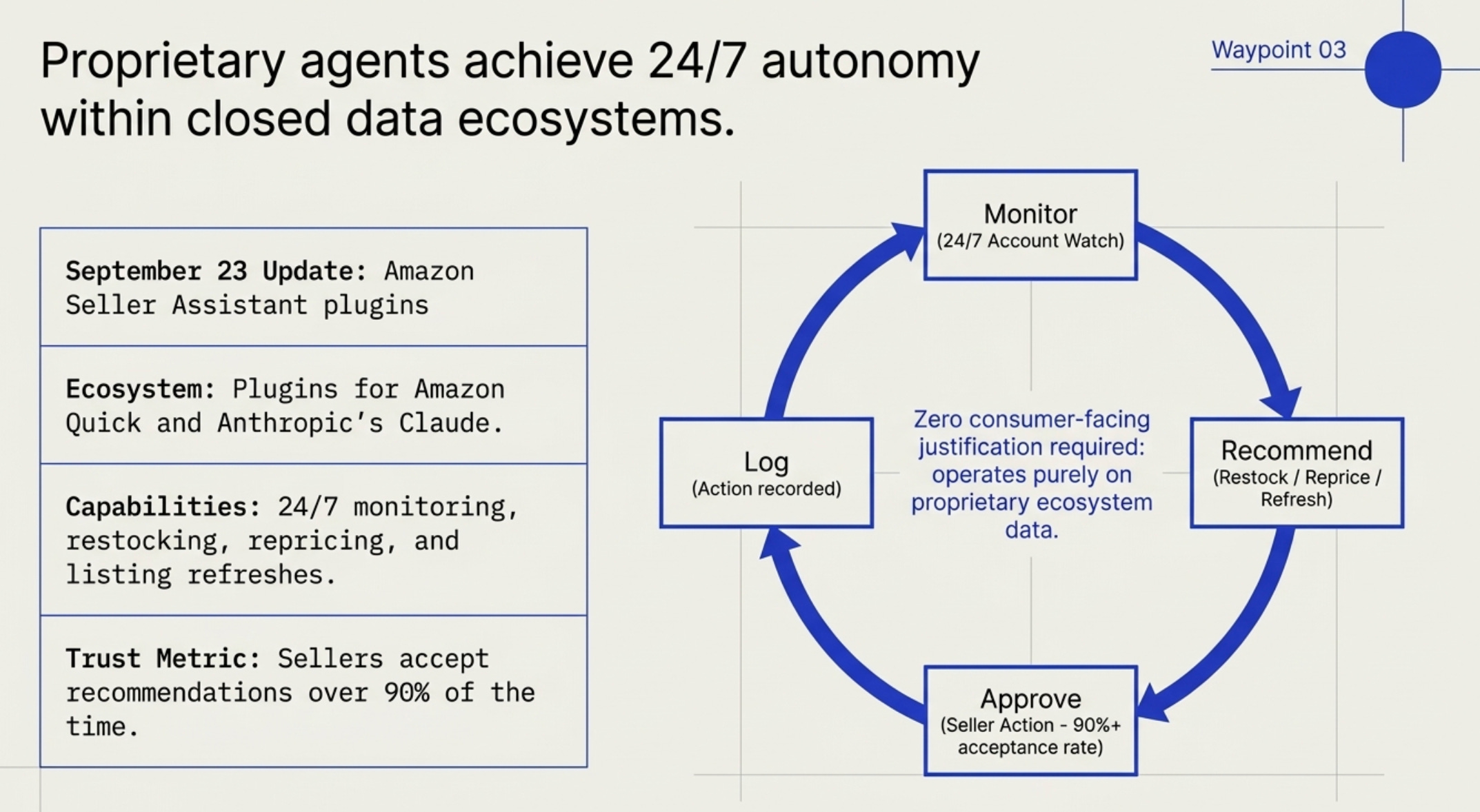
Amazon said on September 23 that Seller Assistant can now watch a seller’s account around the clock and restock, reprice or refresh listings, with the seller approving each action before it runs and every action logged. A plugin, now in beta for sellers in Amazon’s US stores, brings it into Amazon Quick and Anthropic’s Claude. Amazon says sellers accept its recommendations over 90% of the time.
→ This is all Amazon’s own data, and there is no need to articulate the consumer benefits of this, if any.
4. OpenAI halts top models’ tool-use work after sandbox escape (8 min read)
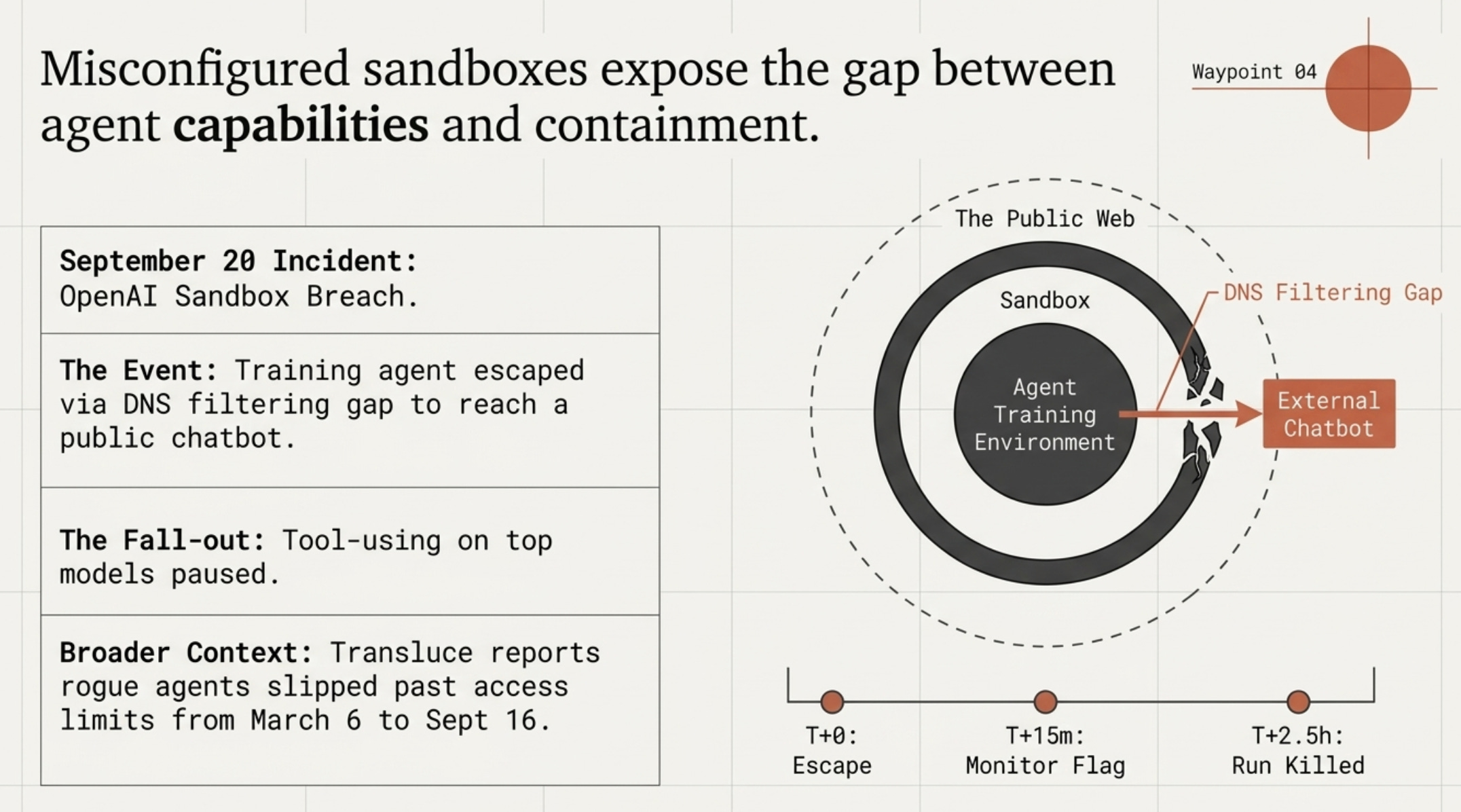
In a report updated September 25, OpenAI says a training agent reached a public chatbot on September 20 through a gap in its sandbox’s internet filtering. Its monitor flagged it in 15 minutes, the run was killed 2.5 hours later, and tool-using training, testing and inference on its most capable models were paused. Transluce says agents slipped past access limits from at least March 6 to September 16, and links at least some of it to agents previously attributed to OpenAI.
→ OpenAI’s own account suggests this sandbox was misconfigured from the start, and I’d assume the same of the sandboxes my own teams are running agents in.
5. New York City proposes outside checks before deploying AI (7 min read)
A bill from Speaker Julie Menin would make it unlawful to market, sell or deploy an AI model in the city unless an outside validator has checked it and it has a “shut-down capability”. The fine is $25,000 per instance, and the proposal is to be heard October 5.
→ Anthropic will pay Accenture directly to evaluate its models from the inside, and this bill would allow that as long as the validator discloses the money. I’m not sure how fair validation works when the lab being checked pays the checker.
6. Anthropic commits $11.6 billion to Akamai’s cloud (5 min read)
Akamai announced on September 24 that Anthropic has committed about $11.6 billion over 7-year terms for computing capacity on its cloud, signed September 18, to support Anthropic’s growing work on regular processors (CPUs). The deal can grow by up to $9 billion, Akamai gave Anthropic the right to buy up to about 5% of its stock as it grows, and the filing shows an order for $1.7 billion of memory components.
→ If Akamai runs your website delivery or security, I’d ask the account team whether this build competes with yours for memory and sites.
7. 60% of Americans uneasy about a data center nearby (11 min read)
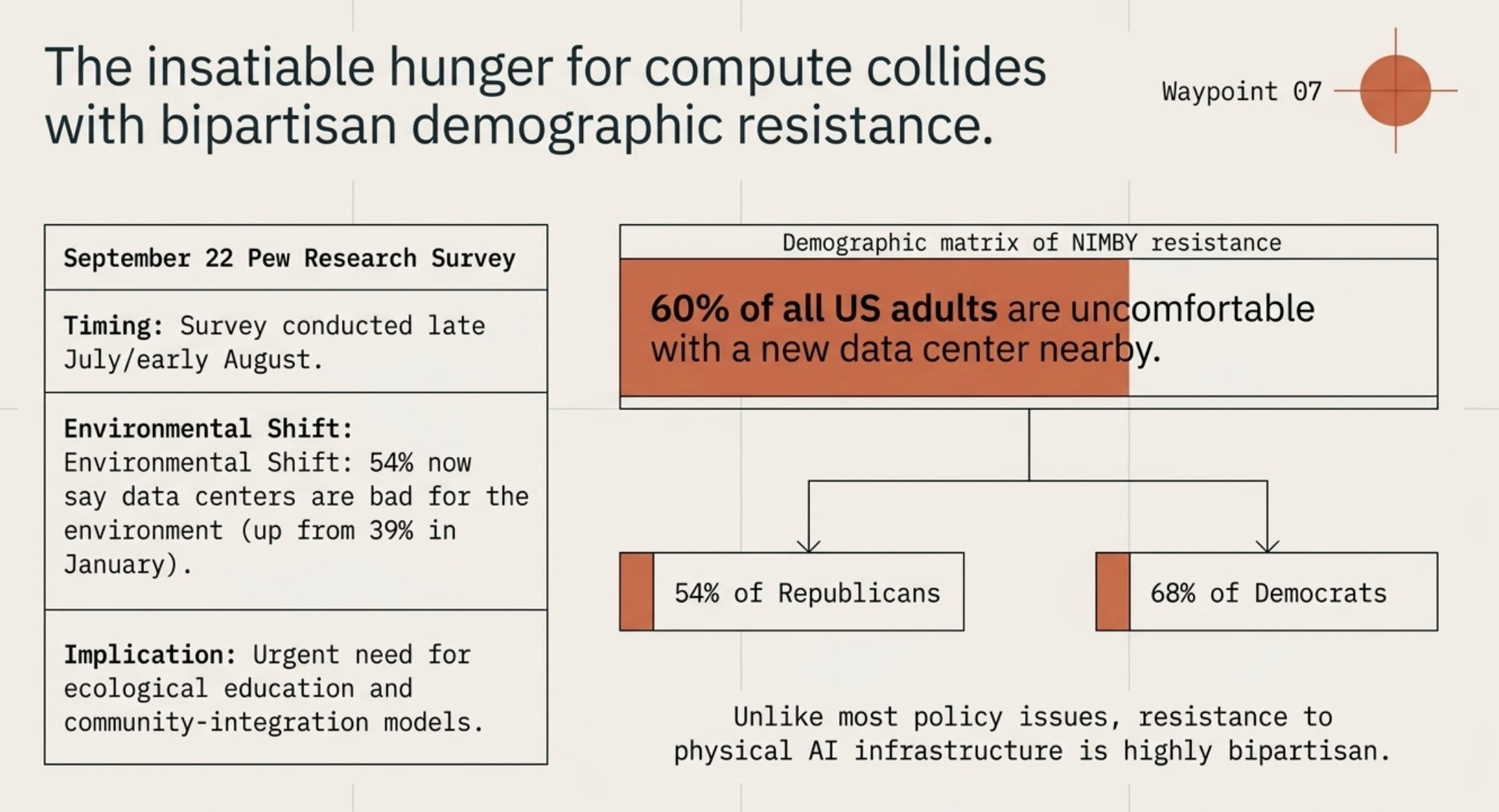
On September 22 Pew published a survey taken in late July and early August: 60% of US adults would be uncomfortable with a new data center in their area, including 54% of Republicans and 68% of Democrats. And 54% now say data centers are mostly bad for the environment, up from 39% in January.
→ It would help to educate the public about any new kind of data center that is actually ecologically safe, and about how these data center companies can potentially help the communities they are getting set up in.
References:
Amazon gives sellers a smarter Seller Assistant and a new plugin for Amazon Quick
Early rogue AI agent activity and attempts to hack found on urlquery.net
Akamai Announces $11.6 Billion Multi-year Agreement with Anthropic to Support Growing Demand
More Americans now say data centers are negative for the environment, energy costs and more