

Team USA play Australia today, in a World Cup being held, in Seattle, in our own backyard. Watch the players all you want.
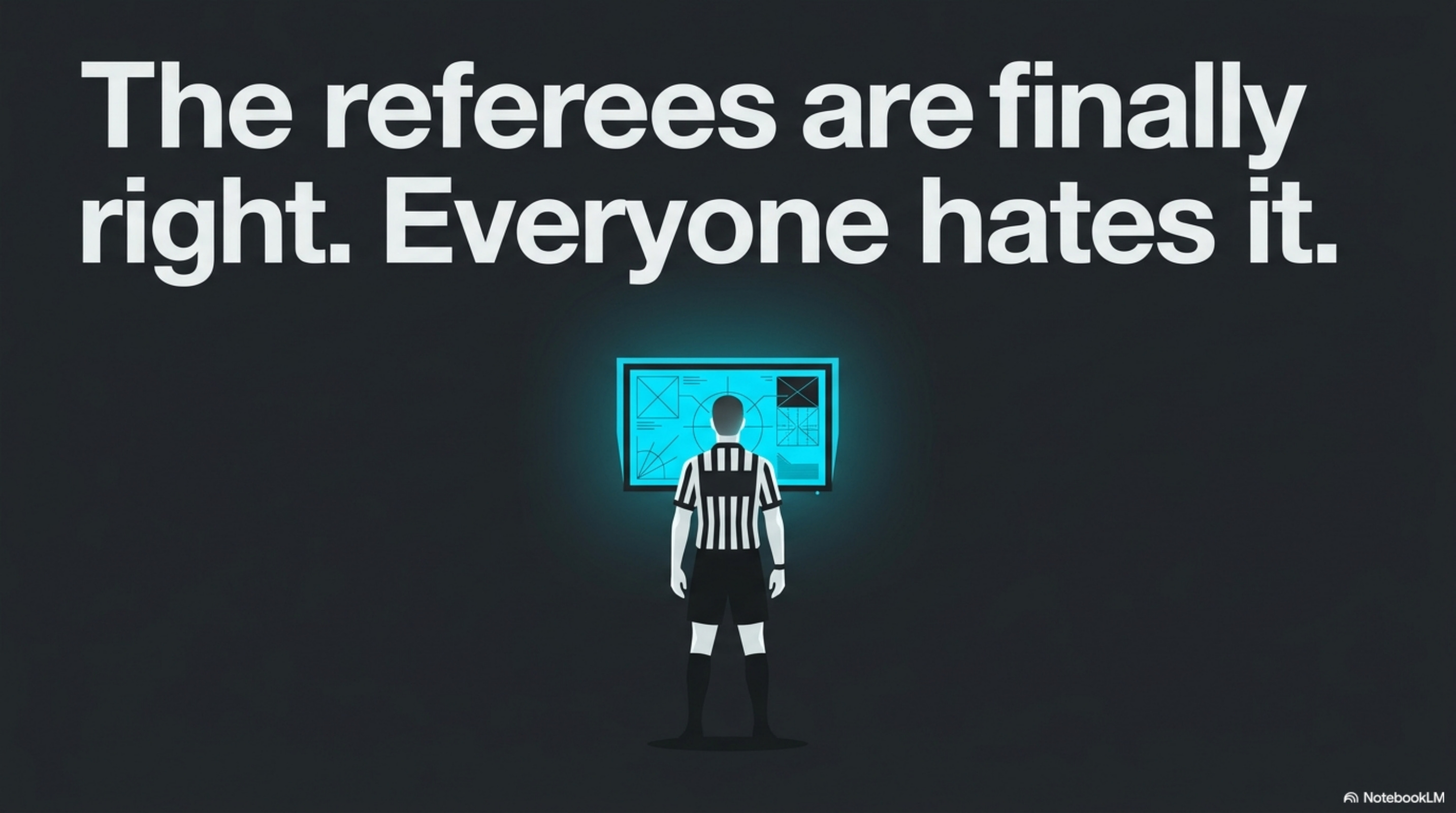
The more interesting machine is the one you can’t see — a system in a back room deciding, to the centimeter, which goals are real.
It almost never gets it wrong anymore. That turns out to be the problem.
The goal that vanished
Rewind to November 2022. Argentina — Lionel Messi, 3 years unbeaten, everyone’s pick to win the whole thing — against Saudi Arabia, who nobody gave a prayer.
Argentina go up 1-0.
Then they score again. Lautaro Martínez times his run, takes the pass in stride, finishes. The bench is up and celebrating.
And then the goal is gone, erased for offside.
Here’s offside in one sentence: when a teammate passes you the ball, you need a defender between you and the goal, or it doesn’t count. It’s the rule that stops attackers from loitering next to the keeper waiting for a long ball.
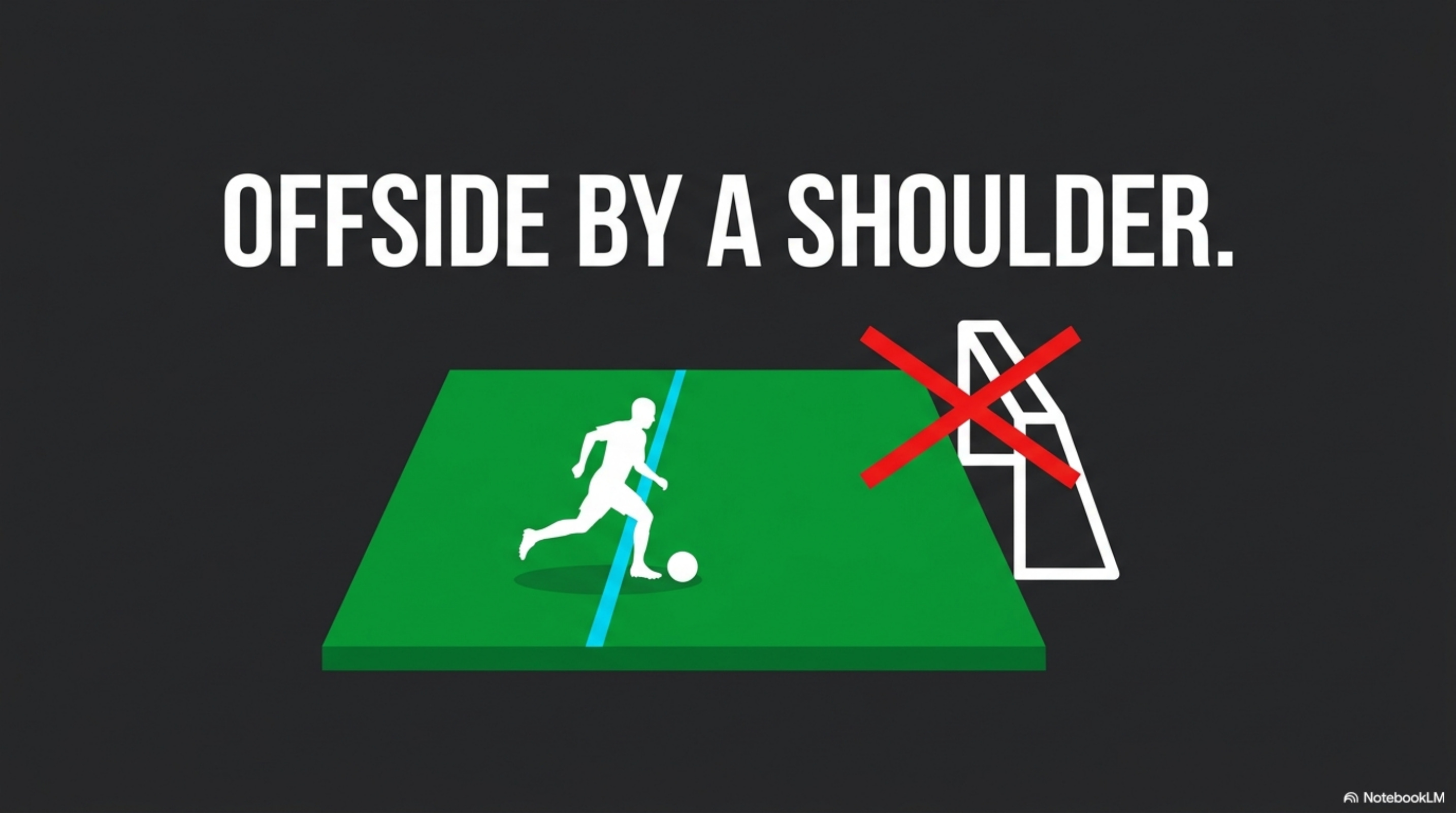
Nobody on the field saw a problem. But in that back room, a system tracking 29 points on every player’s body fifty times a second had measured Martínez’s shoulder a few centimeters past the last defender at the exact instant the ball left his teammate’s foot. Offside. By a shoulder. By less than the width of your hand.
It kept happening.
3 Argentina goals came off the board for offside that day — the tightest of them decided by that same shoulder-and-centimeter math.
Saudi Arabia scored twice, held on, and won 2-1: one of the great upsets in the sport’s history.
And on calls like these, the machine is right.
Go frame by frame and the shoulder really is past the line. The stadium even played a clean little 3D animation of it, so everyone could see exactly why.
It satisfied no one.
(Argentina, for the record, went on to win the tournament anyway. So this isn’t a sad story. It’s a clean example of something strange: a correct call that brought zero peace.)
Fifteen years of getting it right
Soccer — football everywhere but here, didn’t always trust machines.
For most of its history the sport was almost proud of its human mess.
The night that changed was June 2010, World Cup, England against Germany. England’s Frank Lampard hammers a shot that bounces a full yard over the line — a goal by any honest eye — and the referee waves play on.
Never saw it. England go on to lose the match badly.
The replay was so damning that FIFA’s president, who had spent years calling human error “part of the game,” reversed himself within days.
What followed was a slow march, each step automating something a little harder than the last.
First, goal-line technology: did the ball cross the line, yes or no. The simplest possible question, answered with a buzz on the referee’s watch within a second. Nobody really argued.
Then VAR — video review. A booth of officials who can pull the referee over to a pitchside screen to look again at goals, penalties, and red cards (a player getting sent off).
Then, in 2022, the offside system that erased those Argentina goals: cameras in the roof plus a sensor inside the ball itself, reporting its position 500 times a second.
By this World Cup — the one happening right now — the calls are more accurate than at any point in the sport’s history.
FIFA has even started having referees announce the big VAR decisions over the stadium loudspeaker, so the whole crowd hears the reasoning out loud.
The first famous one, a few days ago, came out so garbled it became the tournament’s first meme.
And fans want it gone.
A survey this spring of nearly eight thousand of them found more than eight in ten would rather watch football without VAR than with it — and roughly nine in ten said it’s stolen the simple joy of celebrating a goal.
Not “needs work.” Gone.
The calls got more correct, and over the same years people got less reconciled to them.
If accuracy were the thing that made people accept a decision, you’d expect the opposite.
What the referee was actually for
I think we misread what the referee was for in the first place.
We told ourselves his/her job was to get it right.
It wasn’t — he was reliably, measurably wrong. The research on this is decades deep and pretty brutal: referees gave home teams more stoppage time — the extra minutes tacked on at the end — when they were losing, and less when they were winning, swayed by the roar of the crowd.
Bigger crowd, bigger bias.
The man in the black shirt was a walking bundle of human error.
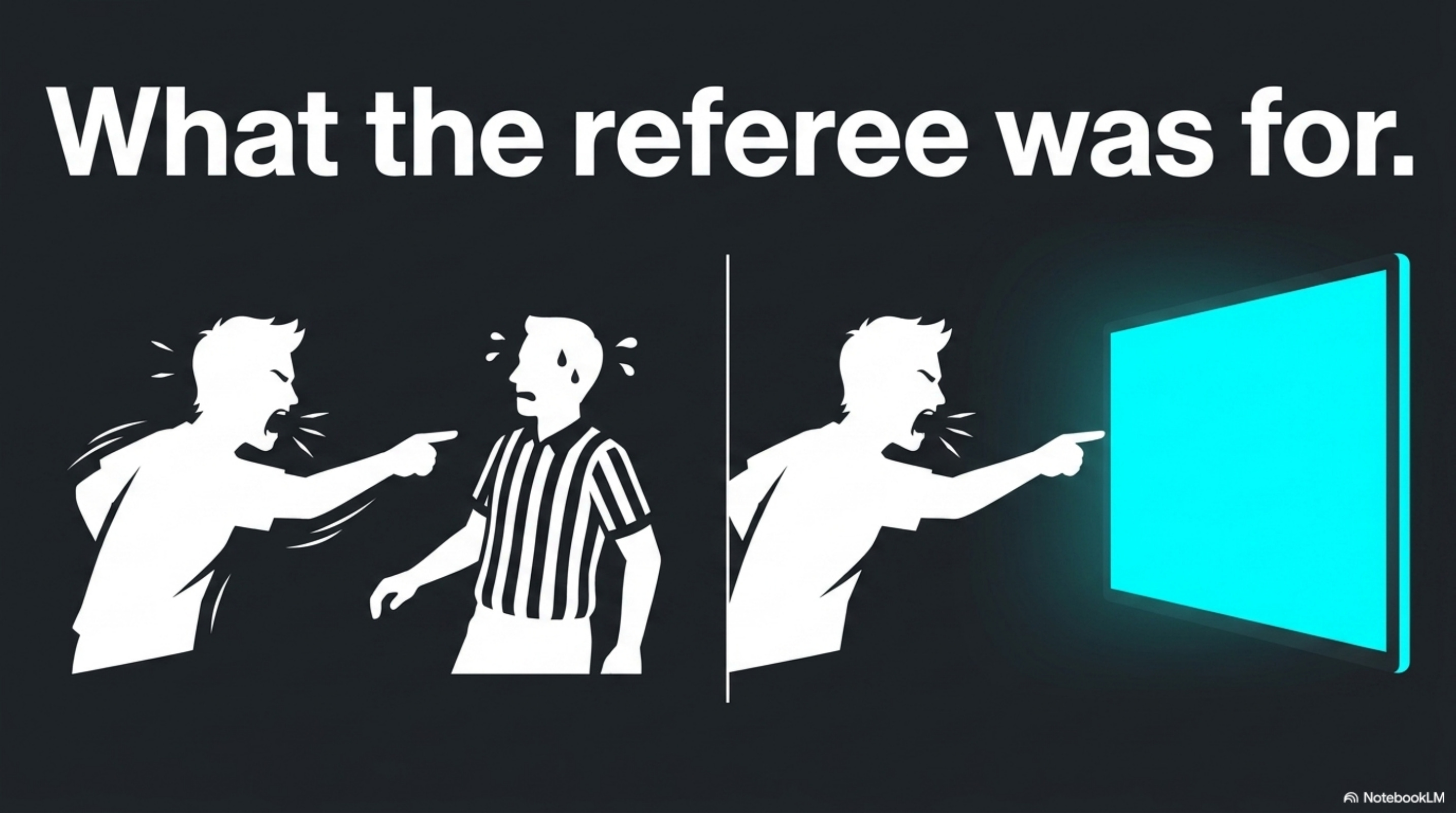
But you could yell at him. You could blame him. You could believe, all the way home and all week, that he was a clown and that next week would be different. When your team lost to a bad call, your anger had somewhere to go.
That’s what the machine quietly took away.
It removed the bad calls — and it removed the person you could argue with. “We got robbed” is a sentence with a future; you tell that story for years.
“Our striker’s shoulder was three centimeters offside” is just a fact. There’s nothing to do with it.
Nobody to be angry at. Cold, correct, final.
American sports fans know this feeling in their bones, even if they’ve never watched a minute of soccer.
It’s the replay booth.
It’s the touchdown your team scored, and celebrated, and then had taken back four minutes later by a man under a hood in New York staring at a monitor.
The catch nobody could define
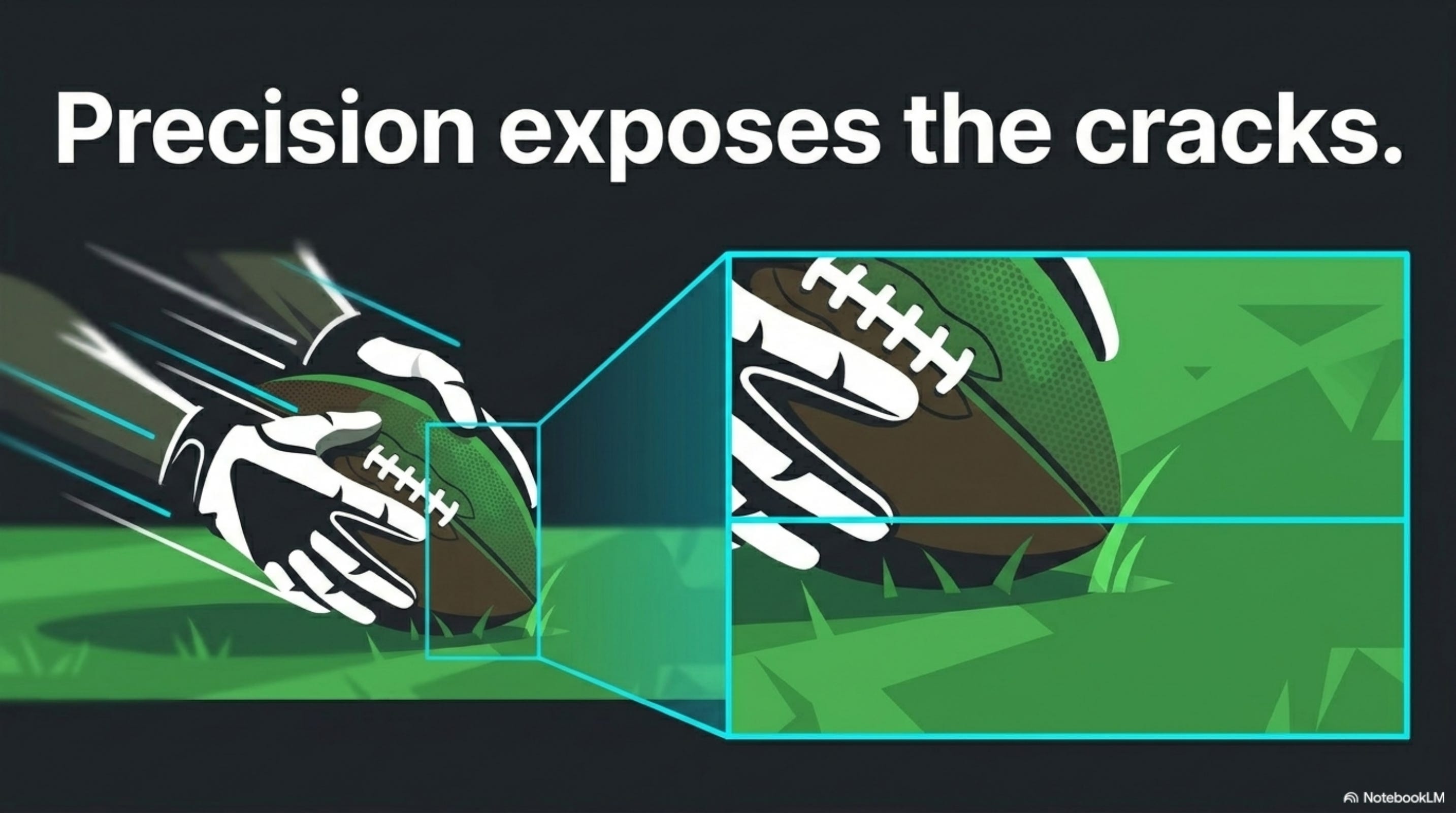
The NFL has lived the strangest version of this.
For most of a decade the league had a crisis over a question you’d think was settled: what is a catch?
Calvin Johnson, Dez Bryant — touchdowns everyone in the building saw, erased on review because in super slow motion the receiver hadn’t “completed the process” or “survived the ground.” The closer they looked, the less anyone — fans, players, the referees, the actual rulebook — could agree on what catching a ball even meant.
The lesson buried in that mess: the slow-motion replay didn’t make the rule clearer.
It made the rule’s vagueness impossible to ignore.
At full speed, “he caught it” was obvious. Zoom into hundreds of frames a second and you find out your rule was always a little arbitrary — you just couldn’t see the seam before.
That’s what hyper-precise measurement does. It doesn’t reveal the truth.
It reveals how rough your rules always were.
Football’s shoulder-width offside is the same trick: the rule was fine when the line was fuzzy.
Make it exact, and every close call turns into a fight about a line that was never meant to be that precise.
Cricket left a door open
Here’s the part that matters most, because not every sport made football’s mistake.
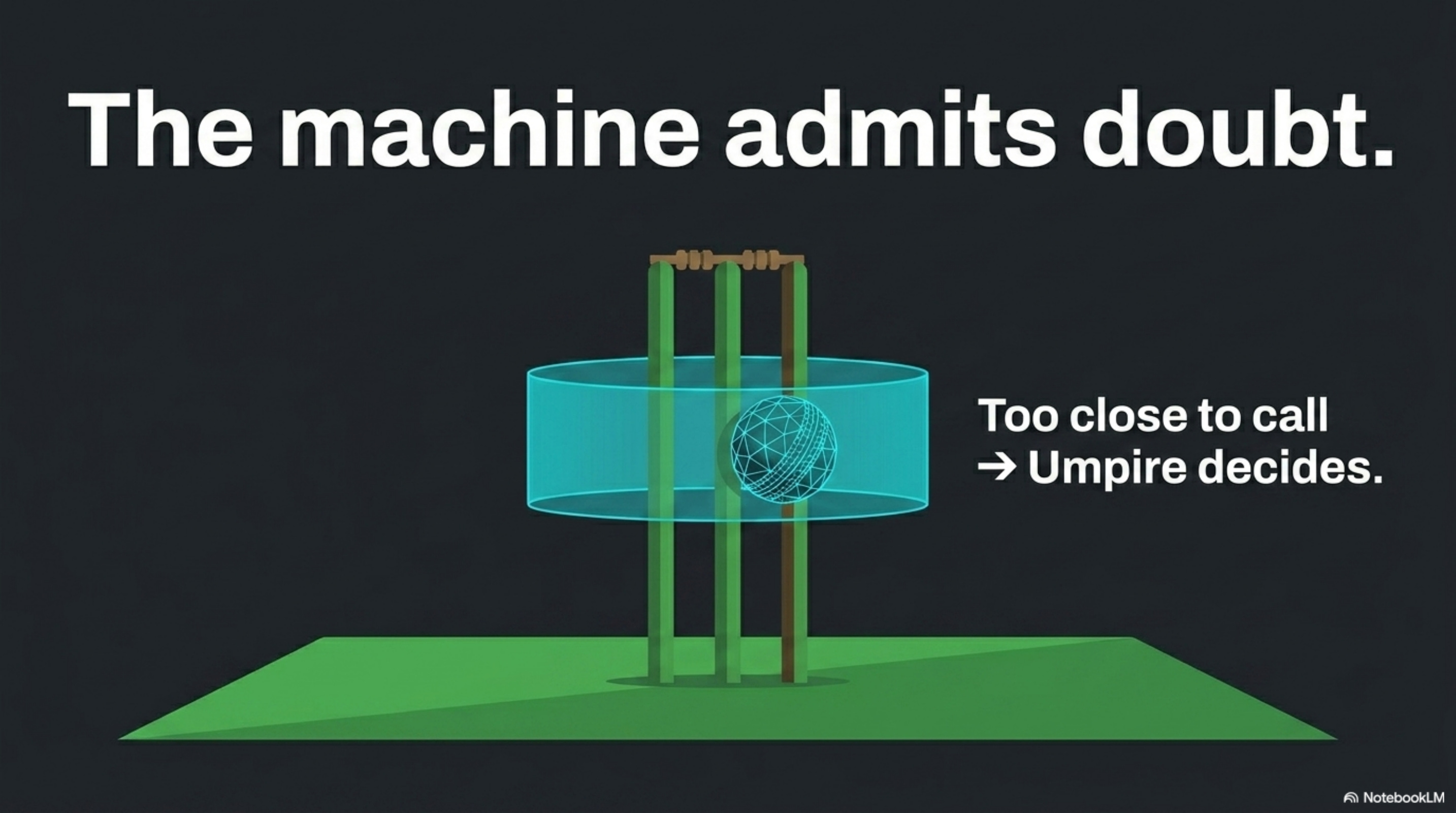
Cricket uses the same kind of ball-tracking to judge its hardest call. If the tracking shows the ball only clipping the stumps — inside the system’s own margin of error — it does not overrule the umpire. The call on the field stands.
They named that band “umpire’s call.”
Cricket’s machine, in other words, is built to admit when it isn’t sure — and in those moments, the human keeps the decision.
And cricket wrote the size of that band into the rules, in advance.
Football never defined what “clear and obvious” actually means, so every borderline call turns into an argument about the rule itself.
Football’s machine never concedes doubt. It hands you a confident, exact answer even when the call is a coin flip, and presents the coin flip as settled fact. The NFL, for all its catch-rule pain, landed closer to cricket: the call on the field stands unless the replay shows “clear and obvious” evidence to overturn it. A tie goes to the human.
Cricket fans complain about plenty. They don’t rage at the technology the way football fans do. The difference isn’t better cameras or smarter sensors.
Cricket left people a little room.
This is your AI strategy, whether you’ve noticed or not
Everything above is about to play out inside companies everywhere, if it hasn’t started already.
Maybe it’s the model that decides which loan applications get approved. The one that flags which insurance claims to deny. Or the one that screens résumés before a human ever sees them.
Here’s the obvious objection, and it’s a good one: football is the easy case.
A shoulder is either past the line or it isn’t — there’s a real answer sitting in the geometry, and nobody loses their home over it.
Loan approvals, claims, hiring?
The “right answer” is contested, the data is half guesswork, and the stakes are someone’s livelihood. So the analogy should fall apart.
It doesn’t — it flips the other way.
Football is the easy version of this problem: clean rules, low stakes, a perfect replay for every call. And it still blew up, after fifteen years of fine-tuning. So what happens when you aim a messier, higher-stakes version at people who can’t push back?
The easy case already looks shaky.
The fashionable fix in AI right now is explainability: show the model’s work — here are the factors, here’s why you scored where you did — and people will accept the outcome.
Real teams and real budgets are pointed at making the machine explain itself.
Football just ran that experiment in public, on the biggest stage there is. The 3D offside animation is a perfect explanation. It shows you, precisely, why your goal didn’t count. It changes nothing about how furious you are. Worse than nothing, really: explaining exactly why someone lost, with no way for them to push back, doesn’t feel like fairness.
It feels like a wall blocking you with a diagram explaining why you are blocked on it.
That’s the trap sitting inside customer-facing AI.
A company can send a rejected applicant a beautiful breakdown of the twelve factors behind the denial, and if there’s no human they can reach, no way to contest it, no admission that the model might be wrong at the edges — it has built the offside animation. Correct, explained, infuriating.
So if you’re putting AI in charge of real decisions about real people, here’s what football and cricket would do differently.
Build a way to push back before you ship the model — and make it real.
Be honest about what “arguing with the ref” ever did: yelling never changed the score.
It changed how the loss felt.
That’s catharsis, not a reversal — and you have to decide which one you’re building. A grievance line that makes people feel heard and changes nothing is just the offside animation with a warmer voice. Football got away with pure catharsis because nobody’s mortgage rode on the call.
Let the machine say “I’m not sure” — and only on the close ones.
You don’t owe every applicant a human; you owe the marginal ones a human.
That’s cricket’s umpire’s call: the confident nine-in-ten fly through, the coin-flips go to a person, and the size of the “too close to call” band is written down in advance instead of left to a vague “clear and obvious.” Most of your cost lives in the confident decisions. The trust lives in the close ones.
Make sure your human can actually overrule the machine.
There’s a famous case in English football where the system made a clear error — a good goal wrongly disallowed — and the rules then stopped anyone from fixing it, because play had already restarted.
A human was “in the loop” the whole time and powerless to act. If that’s your setup, you don’t have a safeguard.
The thing the machine can’t give back
There’s one quiet cost in all of this that no upgrade will fix.
We didn’t just take the referee’s mistakes away. We took away the referee — the fallible, blamable, gloriously human target for everything that felt unfair about a game we love.
We swapped him for a verdict you can’t argue with and a cartoon that proves you were wrong.
And the system still works. People keep watching.
Argentina lost those goals and still lifted the trophy, and the world still called them champions.
That’s the strange part: a thing can be accurate, accepted, and quietly hated all at once.
It’s the exact state a despised-but-perfectly-legal credit model lives in — nothing technically fails, and everyone it touches feels processed by a wall.
The screen can show you, down to the millimeter, why your goal didn’t count. It will never give you the thing the sweating man in the black shirt always did, just by being human enough to scream at: the sense that you were heard.
Your customers are about to meet the same machine.
The question for whoever’s deploying it isn’t whether the model is right. It’s where someone’s grievance is supposed to go when it is.
References
FIFA — Semi-automated offside technology (specs: 29 data points, 50×/sec, 500Hz ball sensor): https://inside.fifa.com/innovation/world-cup-2022/semi-automated-offside-technology
FIFA — Offside, referee body-cams & innovation at World Cup 2026: https://inside.fifa.com/news/offside-decisions-referee-body-cams-innovation-world-cup-2026
IFAB — VAR protocol (four reviewable categories; “clear and obvious error”): https://www.theifab.com/laws/latest/video-assistant-referee-var-protocol/
Football Supporters’ Association — 2026 VAR survey data: https://thefsa.org.uk/news/fsa-var-survey-data/
Garicano, Palacios-Huerta & Prendergast (2005), “Favoritism Under Social Pressure,” Review of Economics and Statistics: https://direct.mit.edu/rest/article-abstract/87/2/208/57539
ESPN — 2022 World Cup VAR review (Argentina–Saudi disallowed goals): https://www.espn.com/soccer/story/_/id/37634070/var-review-every-decision-world-cup-analysed
ESPN — The VAR Review: Luis Díaz wrongly disallowed goal (Sept 2023): https://www.espn.com/soccer/story/_/id/38512240/the-var-review-went-wrong-luis-diaz-goal
BBC — Blatter says Lampard “goal” reopened the technology file (June 2010): https://feeds.bbci.co.uk/sport/football/18732237
Wisden — Why DRS has “Umpire’s Call”: https://www.wisden.com/series/world-test-championship-2023-25/cricket-news/explained-why-drs-has-umpires-call-impact-in-line-hitting-the-stumps
ESPN — How the Dez Bryant no-catch changed the NFL: https://www.espn.com/nfl/story/_/id/34997228/how-dez-bryant-no-catch-changed-nfl-forever