

AI Waypoints is a weekly series of AI signals an Enterprise Leader can’t ignore.
This is week 10!
Good morning. This was the week the bills came due as numbers. Salesforce said it expects to spend roughly $300 million on Anthropic tokens in 2026. PwC turned its Anthropic alliance into its own consulting business line. SAP renamed itself an “Autonomous Enterprise” company at Sapphire. UnitedHealth started tracking whether its workers run a Copilot query each day. The Bureau of Labor Statistics showed the first measurable employment dip in the jobs it labels AI-exposed. Cisco booked $5.3 billion in AI infrastructure orders this year and laid off 4,000 people the same day. Microsoft patched two security flaws in its AI agent framework that let a chat prompt become code on your server. And in a federal courtroom, a Microsoft executive said the company has spent more than $100 billion on its OpenAI partnership and would prefer not to be IBM. These are this week’s print, not forecasts.
1. Salesforce puts a number on enterprise AI spend: $300M to Anthropic in 2026
What happened: On a podcast picked up by Yahoo Finance, Benzinga, and TheNextWeb on May 16-17, Salesforce CEO Marc Benioff said the company expects to spend roughly $300 million on Anthropic tokens in 2026, almost entirely on internal coding agents. He also disclosed Salesforce holds about a 1% stake in Anthropic, and floated the need for a routing layer that sends hard reasoning to Claude and easy queries to smaller, cheaper models.
Why it matters: This is the first real-world AI bill I have seen, named, by a sitting Fortune 500 CEO, for a single use case (coding). Spending $300 million a year with one AI vendor is more than most companies pay for all their non-cloud software combined. Every CFO who has been signing off on “AI is a few cents per call” demos now has a public number to compare against. And every model-routing vendor (Martian, NotDiamond, Portkey, OpenRouter) just got a Salesforce-shaped tailwind.
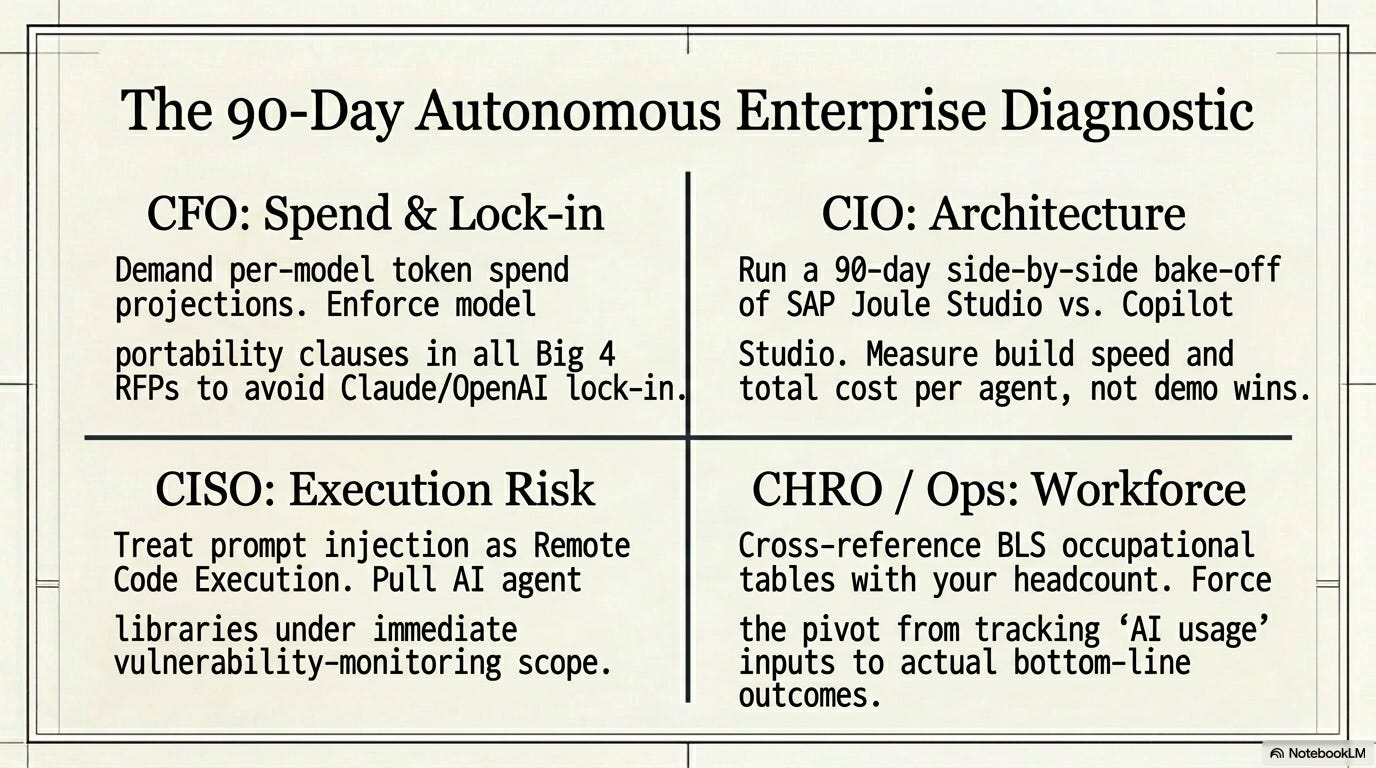
What to do: Ask your AI platform lead this week for a per-model token spend, projected for the year.
2. PwC turns its Anthropic partnership into its own business line
What happened: PwC and Anthropic announced an expanded alliance on May 14: 30,000 PwC US consultants trained and certified on Claude, with PwC claiming “up to 70%” faster delivery in production work. Buried in the announcement was a sharper signal. PwC is launching a new Office of the CFO finance business group built entirely on Claude, starting in banking, insurance, and healthcare. The supporting quote: “Underwriting cycles compressed from 10 weeks to 10 days, opening lines of business that were not previously economically viable.”
Why it matters: A Big 4 firm building a whole business line on one model vendor is very different from the consulting-partnership news of 2 weeks ago. The earlier $1.5 billion services joint venture was about co-investment. This one is about building a service line that depends on Claude. Any company buying finance transformation from PwC in 2026 is buying Claude-fueled deliverables. The cost of porting to a different model is now baked into the engagement.
What to do: If you’re scoping a finance, tax, or audit transformation request for proposal this quarter, add a “model portability” clause to the due diligence checklist. Ask each Big 4 bidder which foundation model their proposed deliverables are built on, and what porting to a different model would cost.
3. SAP renames itself “Autonomous Enterprise” with 50+ assistants and 200+ agents
What happened: At SAP Sapphire 2026 in Orlando on May 12, SAP launched the SAP Business AI Platform. It pulls SAP’s Business Technology Platform, Business Data Cloud, and SAP Business AI under one roof, plus 50+ Joule Assistants directing more than 200 specialized agents across finance, HR, procurement, supply chain, and customer experience. The partner slide listed Anthropic, AWS, Google Cloud, Microsoft, NVIDIA, Mistral, Cohere, n8n, and Parloa. SAP committed a €100 million fund to partner deployments and bundled core assistants into RISE and GROW.
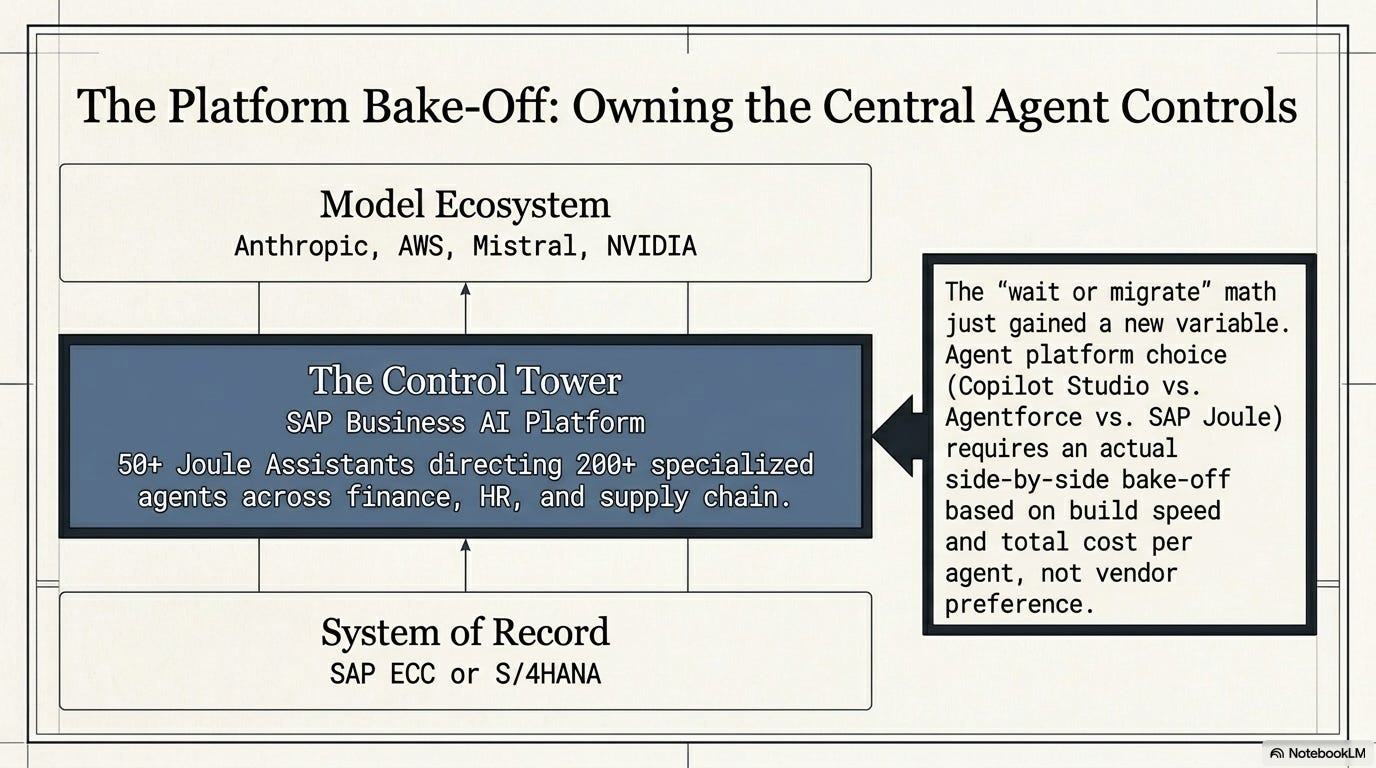
Why it matters: 2 weeks after ServiceNow’s Action Fabric, SAP made the same pitch: own the central agent controls that sit on top of the system of record. For any company running SAP’s older ECC system or the newer S/4HANA, the “wait or migrate” math on the SAP roadmap just gained a new variable. The agent platform choice (Copilot Studio vs. Agentforce vs. AI Control Tower vs. Joule Studio) now needs an actual side-by-side bake-off, not a vendor preference. The seven-vendor scorecard I published last week is one starting point.
What to do: Run a 90-day Joule Studio pilot before year-end on a use case you’ve already tried in Copilot Studio or Agentforce.
4. UnitedHealth turns daily AI use into a workforce metric
What happened: Bloomberg reported on May 15 that UnitedHealth’s Optum unit has built an internal dashboard tracking whether some workers run at least one ChatGPT or Microsoft Copilot query per day. The company says it’s investing $1.5 billion in AI in 2026, claims a 2-to-1 payoff inside year one, runs more than 1,000 AI use cases, and credits AI with avoiding 15 million+ calls, settling hundreds of millions of claims, and contributing 150 million+ lines of code. The 2025 10-K added new risk language on AI accuracy and bias.
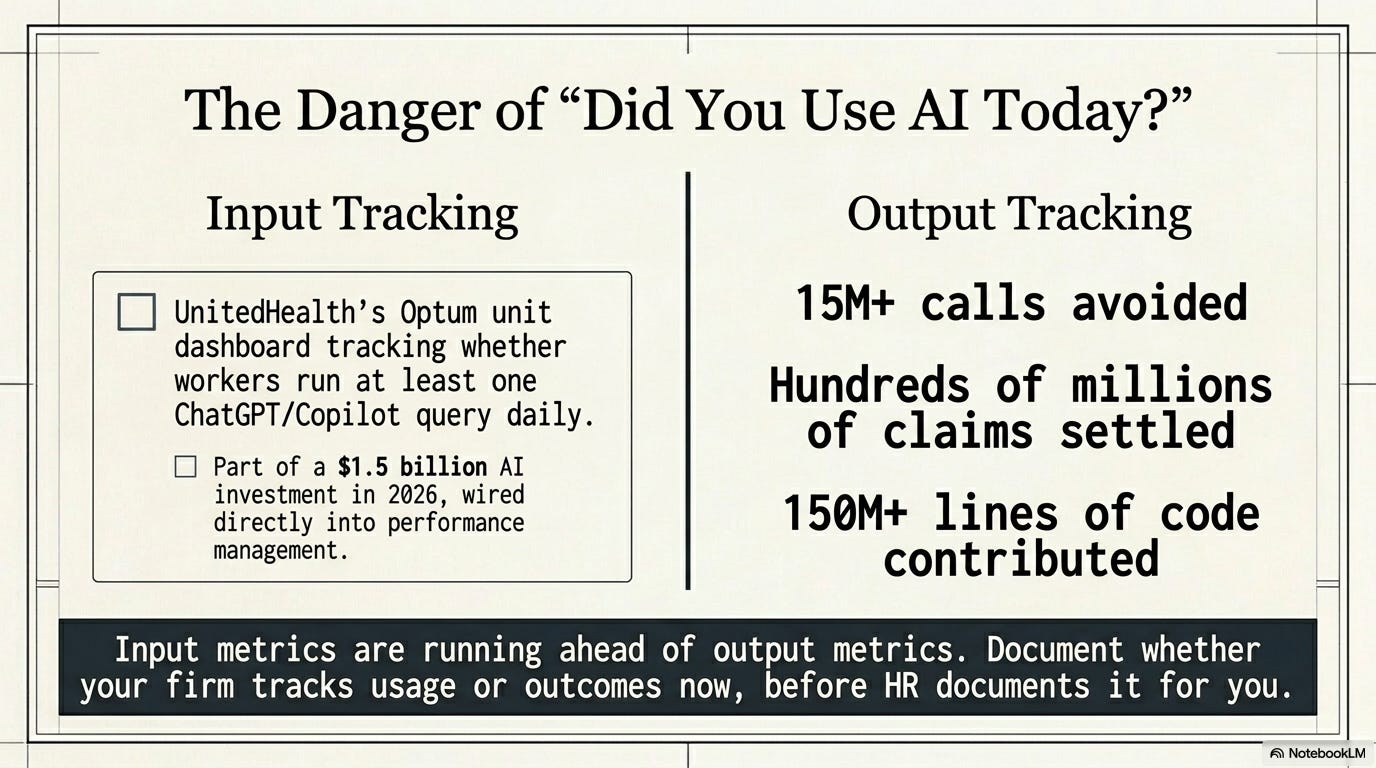
Why it matters: This is the first Fortune 500 health insurer turning “did you use AI today” into a managed metric, and the second Fortune 500 (after Microsoft itself) to wire AI usage data into performance management. The signal indicates the potential for next two years of “AI adoption” dashboards that may or may not connect to anything that shows up in the bottom line.
What to do: Decide this week whether your firm tracks usage (inputs) or outcomes (outputs) and write it down.
5. BLS data shows AI-exposed occupations posted their first measurable employment dip
What happened: Citing newly published Bureau of Labor Statistics (BLS) occupational projections, Bloomberg reported on May 15 that the 18 jobs BLS classifies as AI-exposed (about 10 million jobs in aggregate) posted a 0.2% employment decline between May 2024 and May 2025. That sounds small. It is also the first time the AI-exposed group has lost ground to the broader labor market in a discrete federal data release. The methodology trace lives in the BLS Monthly Labor Review’s AI projections article.
Why it matters: Now there is a government dataset a board can point at. Combined with the UnitedHealth metric and the Cisco layoff (next signal), the picture stops being anecdotal. Operational deployment, workforce metrics, and population-level employment data all point the same direction in the same week.
What to do: Pull the BLS occupational table this week, cross it with your headcount by job family, and flag any AI-exposed role that represents more than 2% of your workforce for the next planning cycle.
6. Cisco books $5.3 billion in AI infrastructure orders this year, raises 2026 guidance to $9 billion, cuts 4,000 jobs
What happened: Cisco reported its third-quarter fiscal 2026 numbers on May 13: $15.8 billion in revenue, $1.06 in adjusted (non-GAAP) earnings per share, up 10% from a year ago, networking product revenue up 25% with orders growing over 50% year over year. Cisco booked $5.3 billion in AI infrastructure orders so far this year, and raised fiscal-year 2026 AI infrastructure orders guidance from $5 billion to roughly $9 billion (with revenue guidance to $4 billion, up from $3 billion). The same day, Cisco announced a restructuring with up to $1 billion in pre-tax severance charges, reported as about 4,000 layoffs, under 5% of headcount.
Why it matters: Two stories in one earnings report. The $9 billion forecast is nearly double what analysts expected. The big cloud companies’ AI spending is still speeding up, not leveling off. The skeptics who said data-center spending peaked in March were wrong. And the same company taking record AI orders is laying off its own white-collar workers. Same pattern across Cisco, Coinbase, PayPal, Meta, and Microsoft: grow revenue by selling AI gear, cut the staff working on everything else.
What to do: Recheck your network refresh budget against your AI workload roadmap before third-quarter budget season. Cisco just told you their cloud-giant customers are pulling lead times forward, which means yours will lengthen. The renegotiation leverage you have this quarter may not exist next quarter.
7. Microsoft patches two AI-framework flaws that turn a prompt into a shell
What happened: Microsoft Security Response Center disclosed on May 7 two critical remote-code-execution vulnerabilities in Microsoft Semantic Kernel, which means an attacker can run code on your server through the AI prompt itself. The two flaws are CVE-2026-26030 (unsafe string handling in vector-store filtering) and CVE-2026-25592 (container isolation bypass via exposed file operations).
Both are patched in Semantic Kernel Python 1.39.4 and .NET 1.71.0. Microsoft’s framing in the post: “Vulnerabilities in the AI layer are no longer just a content issue and are an execution risk.”
Why it matters: Semantic Kernel is the agent framework underneath a large fraction of Copilot extensions and custom agent builds inside large companies. The framing matters more than the patch. Code execution via prompt injection retires the comfortable claim that “prompt injection is a content problem, not a security problem,” and pulls AI agent libraries under the same patching standards every CISO already applies to Log4j-class flaws. Most vulnerability management programs don’t yet track agent-framework versions.
[[
]]What to do: Inventory Semantic Kernel versions across every internal and contractor project this week. Pin .NET to 1.71.0 or higher and Python to 1.39.4 or higher. Then add LangChain, LlamaIndex, AutoGen, and CrewAI to the same vulnerability-monitoring scope. Semantic Kernel won’t be the last AI framework to ship a critical flaw.
8. Microsoft testifies it has spent over $100 billion on OpenAI; “I don’t want to be IBM”
What happened: In Musk v. Altman testimony in Oakland on May 13, Microsoft corporate development executive Michael Wetter said the company will have spent more than $100 billion on its OpenAI partnership by June 2026, counting investments, infrastructure, and hosting costs. An internal Satya Nadella email surfaced in the proceedings included this line: “I don’t want to be IBM and OpenAI to be Microsoft.” Reuters separately reported Microsoft is actively scouting non-OpenAI startups for Foundry.
Why it matters: $100 billion against an estimated $30 billion in OpenAI 2026 annualized revenue means the partnership is still losing money for Microsoft. The “don’t be IBM” line is the clearest possible signal that Microsoft is actively de-risking the dependency on the court record. For anyone buying Azure OpenAI today, the read-through is that the menu of non-OpenAI options in Foundry will expand faster than Microsoft has been signaling publicly. The leverage to negotiate that into a contract is highest right now.
What to do: If you’re inside a 90-day window on a Microsoft renewal, ask explicitly for non-OpenAI model commitments (Anthropic, Mistral, and proprietary Phi options) in the Foundry attachment. Pull the request forward, not back. The leverage curves the wrong way every quarter from here.
What am I missing?
References:
TheNextWeb — Salesforce $300M Anthropic token spend: https://thenextweb.com/news/salesforce-benioff-300-million-anthropic-tokens-slack-coding
Anthropic — PwC expanded partnership: https://www.anthropic.com/news/pwc-expanded-partnership
SAP newsroom — Sapphire 2026 Autonomous Enterprise: https://news.sap.com/2026/05/sap-sapphire-sap-unveils-autonomous-enterprise/
SAP newsroom — Joule Studio enterprise-scale agentic development: https://news.sap.com/2026/05/new-joule-studio-enterprise-scale-agentic-development/
Bloomberg — UnitedHealth AI usage tracking: https://www.bloomberg.com/news/articles/2026-05-15/unitedhealth-tracks-workers-ai-use-in-push-to-transform-company
BLS — Monthly Labor Review, AI in employment projections: https://www.bls.gov/opub/mlr/2025/article/incorporating-ai-impacts-in-bls-employment-projections.htm
Bloomberg — US heavy job losses in AI-exposed roles: https://www.bloomberg.com/news/articles/2026-05-15/us-is-starting-to-see-heavy-job-losses-in-roles-exposed-to-ai
Cisco investor relations — Q3 FY26 earnings: https://investor.cisco.com/news/news-details/2026/CISCO-REPORTS-THIRD-QUARTER-EARNINGS/default.aspx
Bloomberg — Cisco forecast and layoffs: https://www.bloomberg.com/news/articles/2026-05-13/cisco-gives-better-than-anticipated-forecast-plans-to-cut-jobs
Microsoft Security Blog — Semantic Kernel RCE: https://www.microsoft.com/en-us/security/blog/2026/05/07/prompts-become-shells-rce-vulnerabilities-ai-agent-frameworks/
Bloomberg — Microsoft $100B+ on OpenAI partnership: https://www.bloomberg.com/news/articles/2026-05-13/microsoft-spent-over-100-billion-on-openai-partnership-to-date