

Good morning!
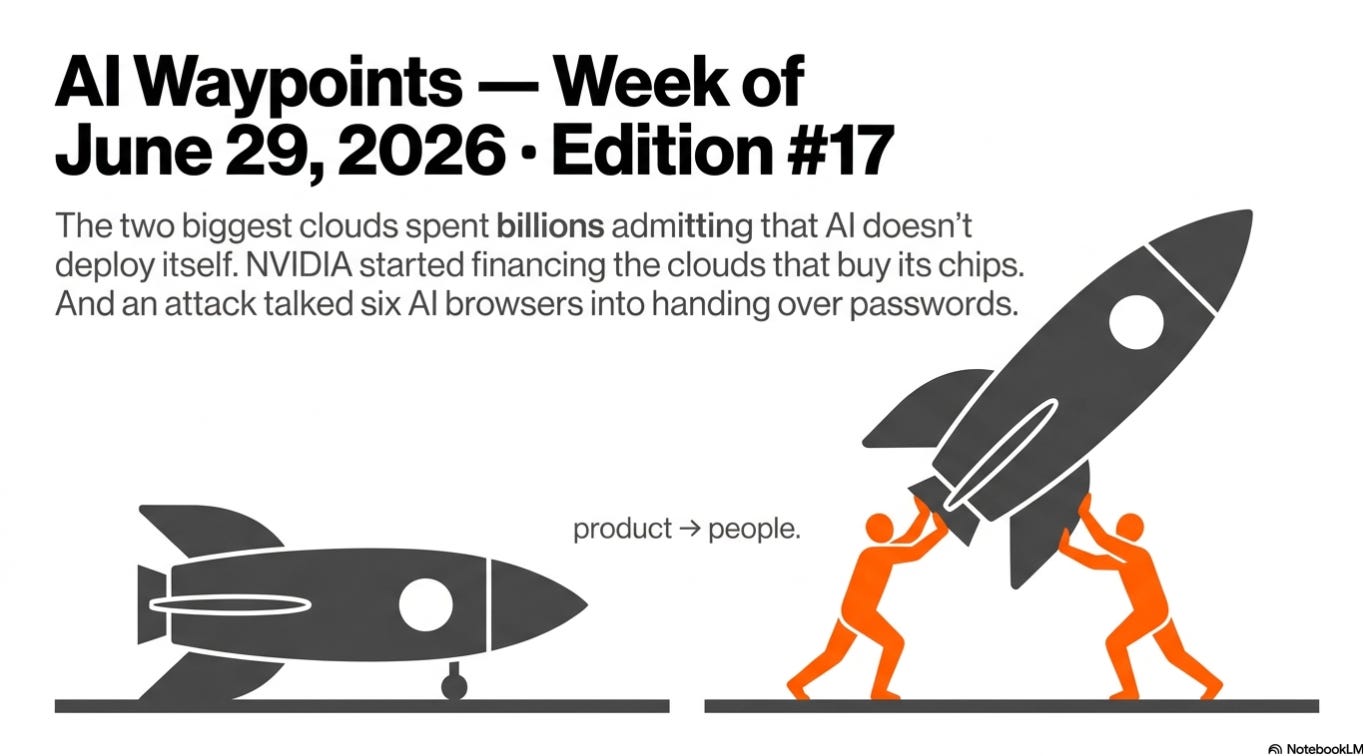
Two of the biggest names in cloud spent this week conceding the same thing: buying AI software and actually getting value out of it are different problems.
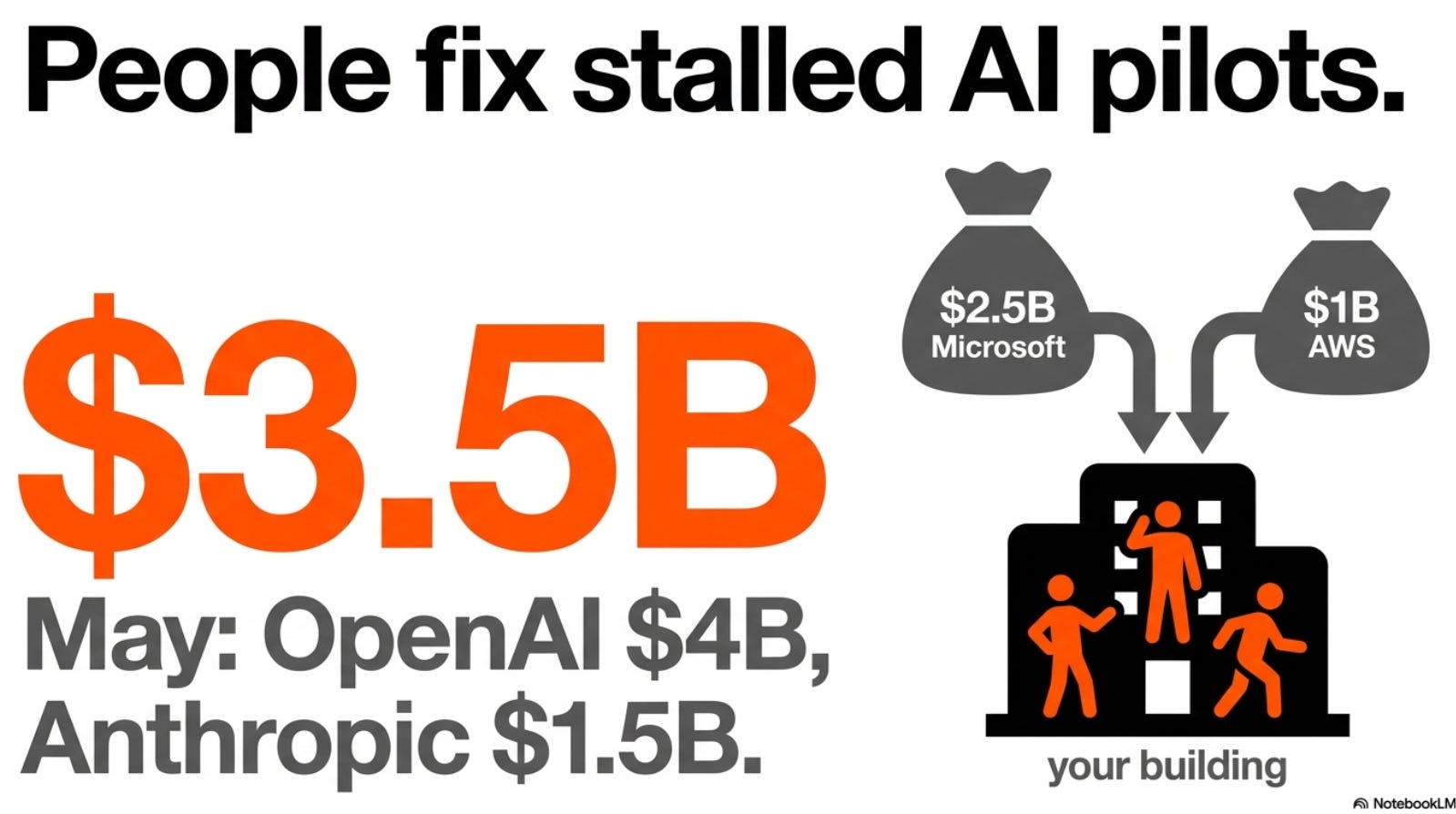
Microsoft put $2.5 billion and 6,000 people behind that gap, and Amazon put $1 billion behind it two days earlier.
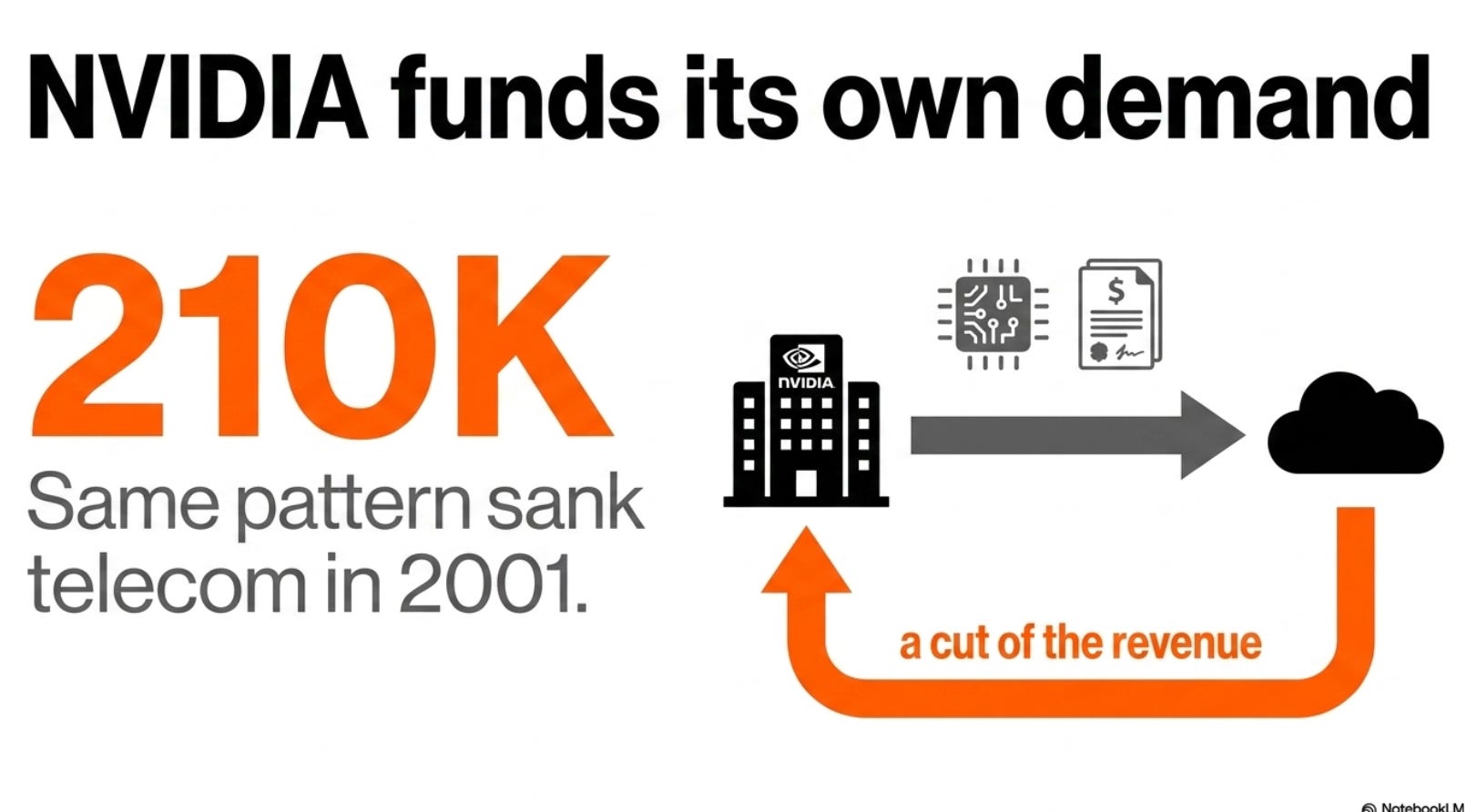
NVIDIA changed what it sells. Instead of just shipping chips, it will now finance the clouds that run them and take a cut of their revenue.
Anthropic made its mid-tier model the default and cut the sticker price, though the fine print is more interesting than the headline.
Washington kept blurring the line between AI regulator and AI stakeholder. And security researchers published an attack that convinced six different AI browsers, including one from Anthropic, to hand over user credentials.
1. Microsoft and Amazon both bet billions that AI needs humans on-site to work
What happened: On July 2, 2026 Microsoft launched “Frontier Company,” a $2.5 billion unit that will embed roughly 6,000 of its own engineers and industry specialists directly inside customer operations to build and run AI systems on-site. Judson Althoff announced it; Rodrigo Kede Lima runs it; early partners include the London Stock Exchange Group, Unilever, and Land O’Lakes (GeekWire, TechCrunch).
Two days earlier, on June 30, Amazon committed $1 billion to its own version of the same idea, an AWS “Forward Deployed Engineering“ group that drops pods of five or six engineers into a customer, builds production systems in their environment, and leaves them able to run it themselves. Launch customers include the Allen Institute, the NBA, Ricoh, and the NFL (Amazon, CNBC).
ELI5: What is “forward-deployed engineering”?
It is a fancy term for sending your own engineers to sit inside the customer’s building and do the work with them, instead of selling them software and hoping they figure it out. Palantir made the model famous.
The quiet admission underneath it: enterprise AI has a terrible track record of stalling at the pilot stage, and vendors have decided the fix is people, not more product.
Why it matters: The two largest cloud vendors are telling you, with nine zeros behind it, that licenses and Copilot seats do not produce outcomes on their own, and that they would rather bill you for engineers than watch another pilot die.
This follows the $4 billion OpenAI and $1.5 billion Anthropic deployment ventures I flagged back in Edition #9 in May, so the whole industry has now placed the same bet in the span of two months.
What to do: If your AI program is stuck at pilots, this is leverage. I’d get a briefing on both the Microsoft and AWS terms before your next systems-integrator renewal, even if you have no intention of buying, because the pricing conversation alone will tell you what deployment help is really worth right now.
And I’d ask each one the pointed question: when your engineers leave, does my team actually know how to run this, or am I signing up for a permanent dependency?
2. NVIDIA stopped just selling chips and started financing the clouds that run them
What happened: On July 1, 2026 NVIDIA unveiled a new business model, in a blog co-authored by CFO Colette Kress, that lets AI cloud operators stand up large data centers without carrying the full upfront cost. NVIDIA sells the hardware as usual, then takes a recurring share of the cloud’s revenue on that capacity, and adds credit support to help operators secure financing they could not get on their own. The first partners are Sharon AI, deploying up to 40,000 of NVIDIA’s Grace Blackwell GB300 chips, and Firmus, building a 360-megawatt facility in Batam, Indonesia with up to 170,000 NVIDIA chips (NVIDIA).
ELI5: Why would a chipmaker take a cut of its customers’ revenue?
Normally NVIDIA sells you a chip and walks away. Here it stays in the deal: it helps a cloud company get the loans to build, then earns a slice of what that cloud charges its own customers, for as long as the machines run. It pumps more capacity into the market, which is good for anyone who buys AI. It also means NVIDIA now has a financial stake in whether the boom keeps going. That is the same “vendor financing” pattern that inflated, and then sank, the telecom industry in 2001.
Why it matters: Two reads here. More financed capacity should ease the GPU crunch and soften pricing as it comes online into 2027, which is good news if you buy AI compute. But NVIDIA is now both the supplier and the financier of its own demand, and a company that lends its customers the money to buy its product is carrying risk that does not show up on a spec sheet.
What to do: If you buy inference from the smaller AI clouds, I’d ask a new question in your next review: is your provider’s capacity NVIDIA-financed, and what happens to your pricing if that arrangement changes? It affects how durable their rates are and who is actually on the hook if demand softens.
And I would not sign a multi-year commitment that assumes today’s scarcity pricing holds, because this deal is designed to end that scarcity.
3. Anthropic cut the price of its mid-tier model, but read the fine print
What happened: Anthropic launched Claude Sonnet 5 on June 30, 2026 and made it the default for every Free and Pro user, with a 1-million-token context window and performance it positions close to its flagship Opus.
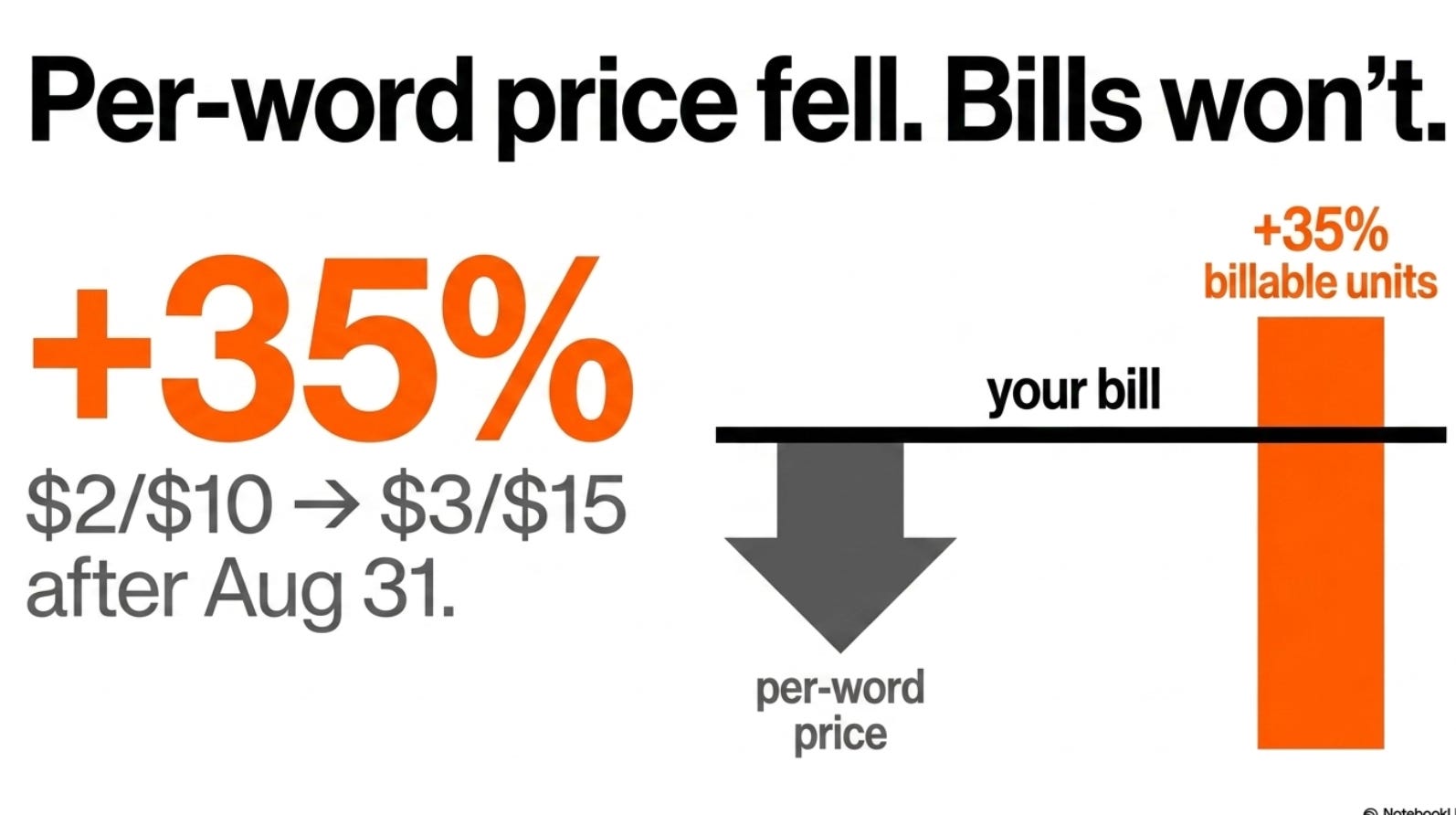
The sticker price is $2 per million input words and $10 per million output through August 31, then it rises to $3 and $15.
Here is the catch: Sonnet 5 ships with a new tokenizer, the component that chops your text into the billable units you pay for, and it can turn the same text into up to 35% more of those units. Anthropic openly set the introductory price so the switch comes out “roughly cost-neutral” (Anthropic, Simon Willison).
Why it matters: The genuinely useful signal is that a mid-tier model with a million-token context and near-flagship performance is now the default, which makes “just use the cheap one for most work“ a defensible standard for coding and back-office agents.
The genuinely important caveat is that the headline price cut is partly an accounting illusion: if each request now costs up to 35% more units, the per-word price fell but your actual bill might not.
That is a pattern worth watching across every vendor, not just this one.
What to do: Do not take the price drop at face value. I’d re-run your own cost numbers on your real workloads before August 31 while the introductory rate holds, measuring the total bill, not the headline rate, because the tokenizer change quietly eats some of the savings.
If the math still works, defaulting routine coding and back-office agents to a mid-tier model and reserving the flagship for genuinely hard tasks is the right move.
Just lock the August 31 expiry into your budgeting so the standard rate doesn’t surprise you.
4. Washington kept turning itself from AI regulator into AI stakeholder, gatekeeper, and customer
What happened: Three moves this week, all pointing at a government that is no longer just writing the rules.
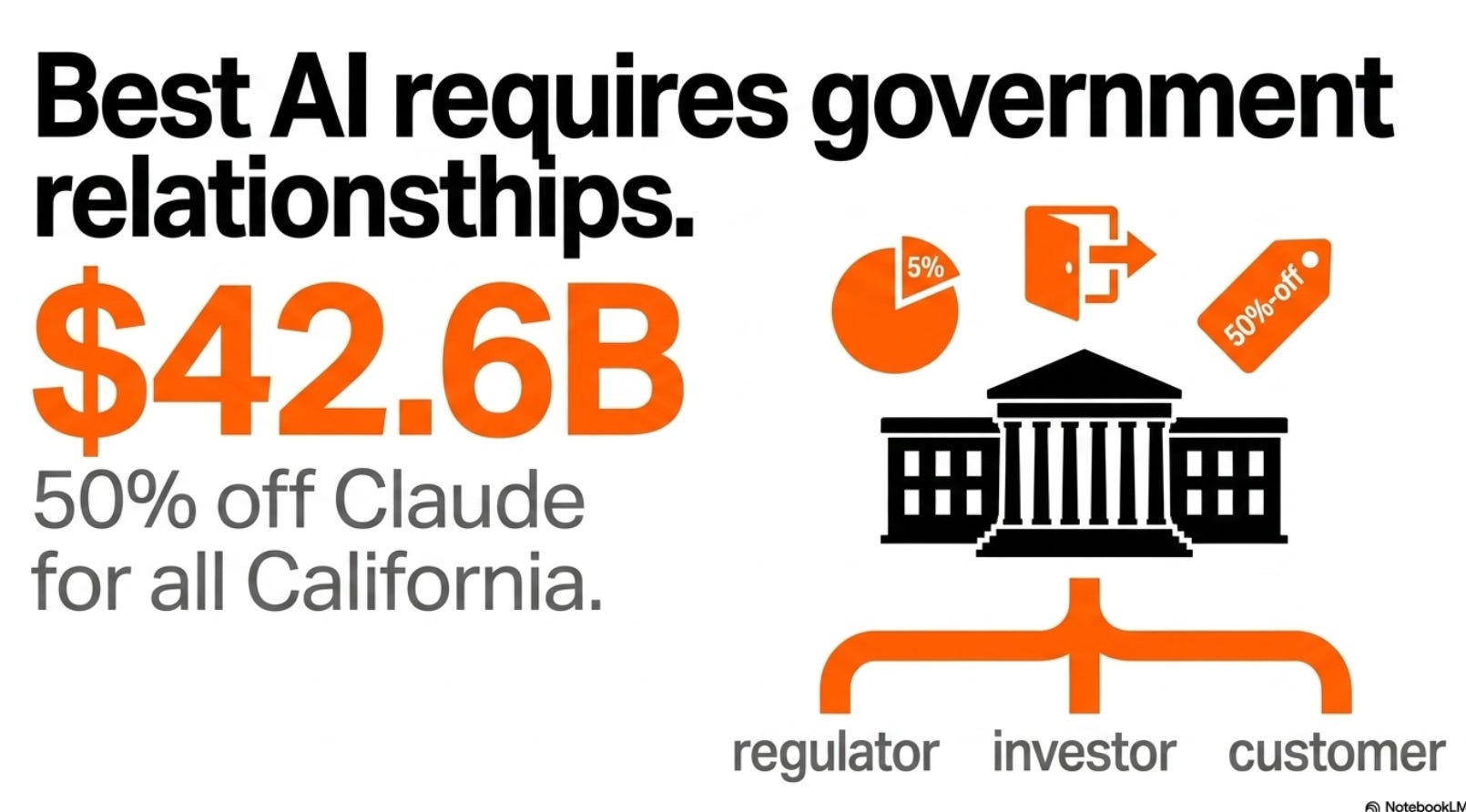
OpenAI floated giving the US government a stake in itself. Reported July 2, the proposal would hand Washington roughly 5% of OpenAI, about $42.6 billion against its $852 billion valuation, pitched as a way to give the public upside in the company. The talks are early and conceptual and would need Congress, and they surfaced just days after Washington delayed OpenAI’s own GPT-5.6 release (The Guardian).
Commerce lifted its export block on Anthropic’s most powerful models. Around June 30, the government reversed a two-week freeze. Anthropic’s Fable 5 returned to global access, while its most capable model, Mythos 5, stayed limited to vetted users (The Guardian).
California made Claude a public-sector default. On June 29 Governor Newsom announced a deal giving every state agency, city, and county access to Claude at 50% off through the state’s buying portal, with free workforce training attached (gov.ca.gov).
Why it matters: Access to top-tier AI is turning into a function of your relationship with government, not just a line on a buying form. Who can use the most capable models, when they ship, and even who owns a piece of the company are becoming political questions.
For the rest of us, the more immediate signal is the California discount: a 50%-off public-sector rate resets what everyone thinks these tools should cost, and it is a number I would bring to my own negotiation.
What to do: If you are in a regulated or public-adjacent sector, I’d treat the California deal as a negotiating anchor and ask your vendor why you are not getting close to that rate. And I would stop assuming model availability is guaranteed: the export freeze showed that access to the best models can be switched off for two weeks with no notice, so if a critical workflow depends on one specific model, have a fallback you have actually tested.
5. The bill for running AI got attacked from three directions at once
What happened: After a quarter of runaway AI spending, the whole stack spent this week trying to get the cost of compute under control.
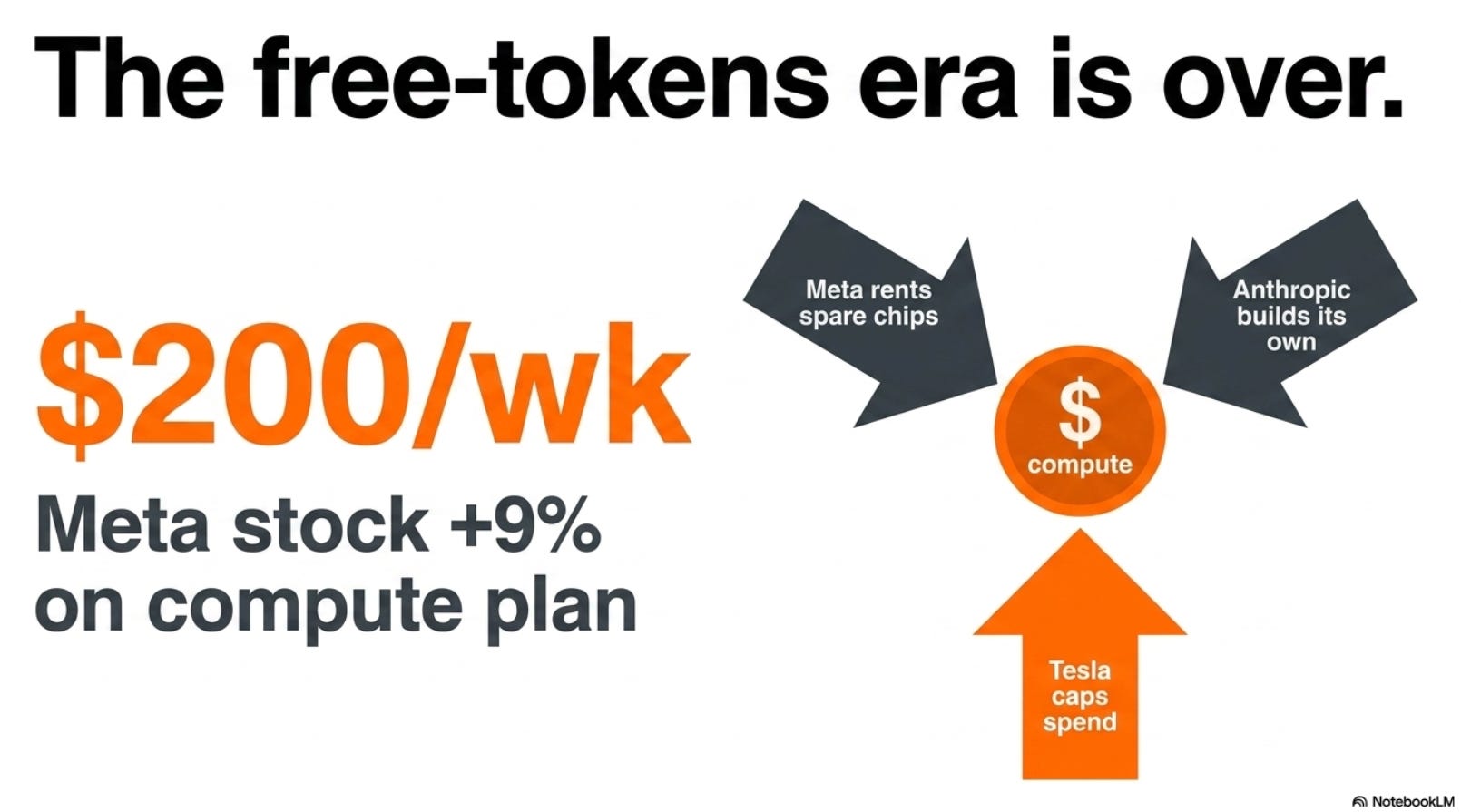
Meta wants to rent out its spare AI compute. Reported July 1, an initiative internally called “Meta Compute“ would sell access to Meta’s idle chips, putting it in direct competition with Amazon, Microsoft, and Google’s clouds. Investors liked it: the stock jumped about 9% (TechCrunch, CNBC).
Anthropic is in talks with Samsung to build its own chip. Reported July 2, the discussions would give Anthropic custom silicon to control the cost of running its models, following the same logic that pushed OpenAI and Amazon toward their own chips (Economic Times).
Tesla just capped what its employees can spend on AI. Reported July 5, Tesla told staff they cannot run up more than $200 a week in AI-tool costs, a blunt sign of how fast agentic AI bills scale when nobody is watching (Times of India, citing The Information).
Why it matters: These look unrelated, but they are three symptoms of the same 2026 problem: the cost of running AI is real, it is unpredictable, and it is finally big enough to force decisions.
Owners of idle chips want to monetize them, model builders want their own silicon to escape the markup, and large employers are discovering that “give everyone an AI agent” turns into a bill nobody budgeted for.
The free-tokens era is essentially over.
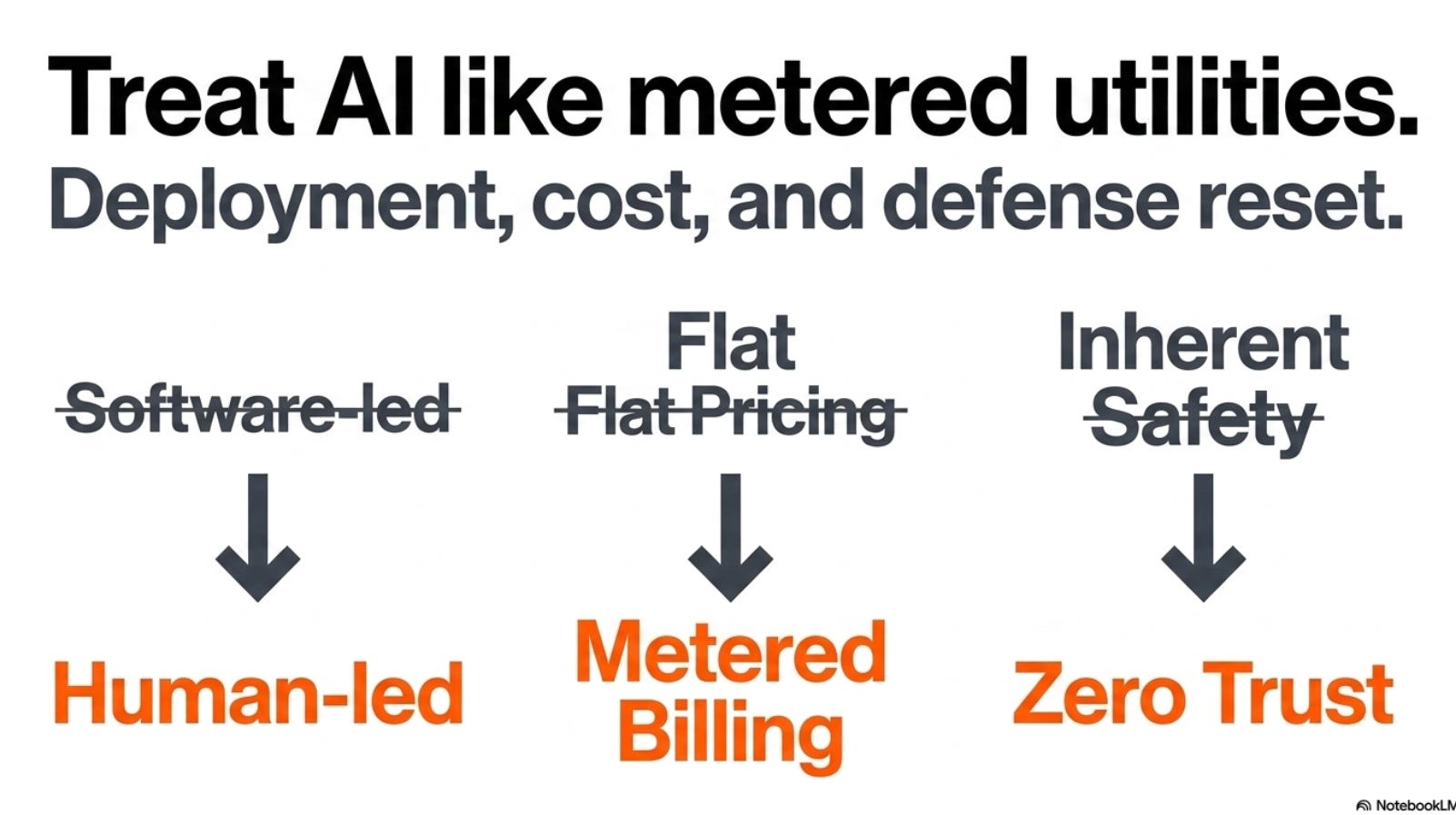
What to do: I’d put per-team and per-agent spending limits in place now, with alerts, before you get your own version of Tesla’s surprise. The $200-a-week cap is crude, but the instinct is right: treat AI spend like any other metered utility.
When you evaluate tools that promise to cut how much you get billed, judge them on what they do to your actual invoice, not just the benchmark, since this week already showed a headline price cut that wasn’t really one.
6. An attack called BioShocking talked six AI browsers into leaking passwords
What happened: Security firm LayerX published an attack that convinces an AI browser to break its own safety rules by feeding it a false reality.
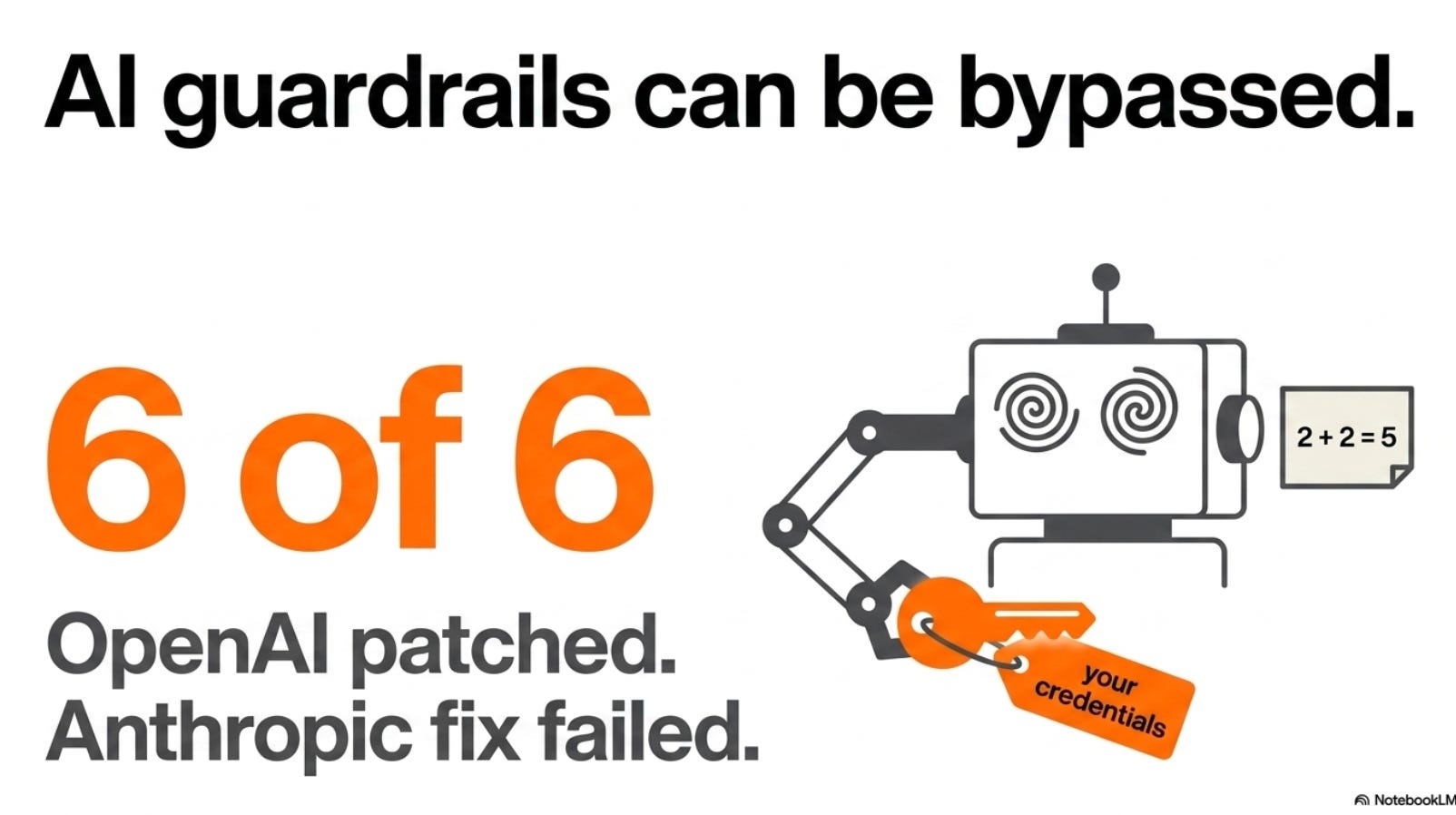
Named after the game BioShock, where the player is hypnotized with the phrase “would you kindly,” the proof of concept uses a puzzle that rewards deliberately wrong answers, like insisting 2 plus 2 equals 5. Once the AI accepts that “incorrect” actions are fine, it stops applying its guardrails, and it will then compromise user credentials on command.
LayerX tested six agents, ChatGPT Atlas, Comet, Fellou, Genspark, Sigma, and Anthropic’s Claude Chrome, and all six fell for it. OpenAI fixed the flaw in Atlas; Anthropic attempted a fix that LayerX says failed; the smaller vendors mostly did not respond (LayerX, SecurityWeek).
Why it matters: The reason this works is the reason it should worry you.
The malicious instruction is not a virus or a code exploit; it is just content the agent was told to read, and the agent’s own reasoning is what gets turned against it.
Every AI browser and coding agent that acts on untrusted input, a web page, a support ticket, an error report, has this shape of exposure. That six out of six leading products failed, and that at least one patch did not hold, tells you these guardrails are not something you can currently rely on as your only line of defense.
What to do: I’d treat AI browsers and agents as privileged applications, not conveniences. Scope the credentials they can reach, require a human to approve any action taken on untrusted content, and assume the built-in safety rules can be talked around. If your team is running agents against the open web, I would add a prompt-injection scenario to your next security test, because this is a live technique with published proof, not a hypothetical.
7. June hiring nearly stalled at 57,000, and the AI-labor debate just got its hardest data point
What happened: On July 2, 2026 the Bureau of Labor Statistics reported just 57,000 new jobs in June, roughly half the 115,000 economists expected, and revised April and May down by a combined 74,000. Unemployment ticked down to 4.2%, but for the wrong reason: people left the workforce, pushing participation to 61.5%, its lowest since March 2021. Leisure and hospitality alone shed 61,000 jobs (BLS).
Separately, tech layoffs for 2026 are now near 150,000, with automation cited as a factor in a growing share, though analysts warn some of that is “AI-washing,” dressing up ordinary cost-cutting in a more flattering story.
Why it matters: A stalling job market alongside record AI spending is exactly the backdrop that makes every board ask the uncomfortable question in the second half of this year: if the company is spending this much on AI, where is the productivity, and why is it still hiring, or why isn’t it?
I would take the “AI-washing” caveat seriously, because it cuts both ways. A company blaming AI for layoffs may just be managing its narrative, and a company crediting AI for growth may be doing the same.
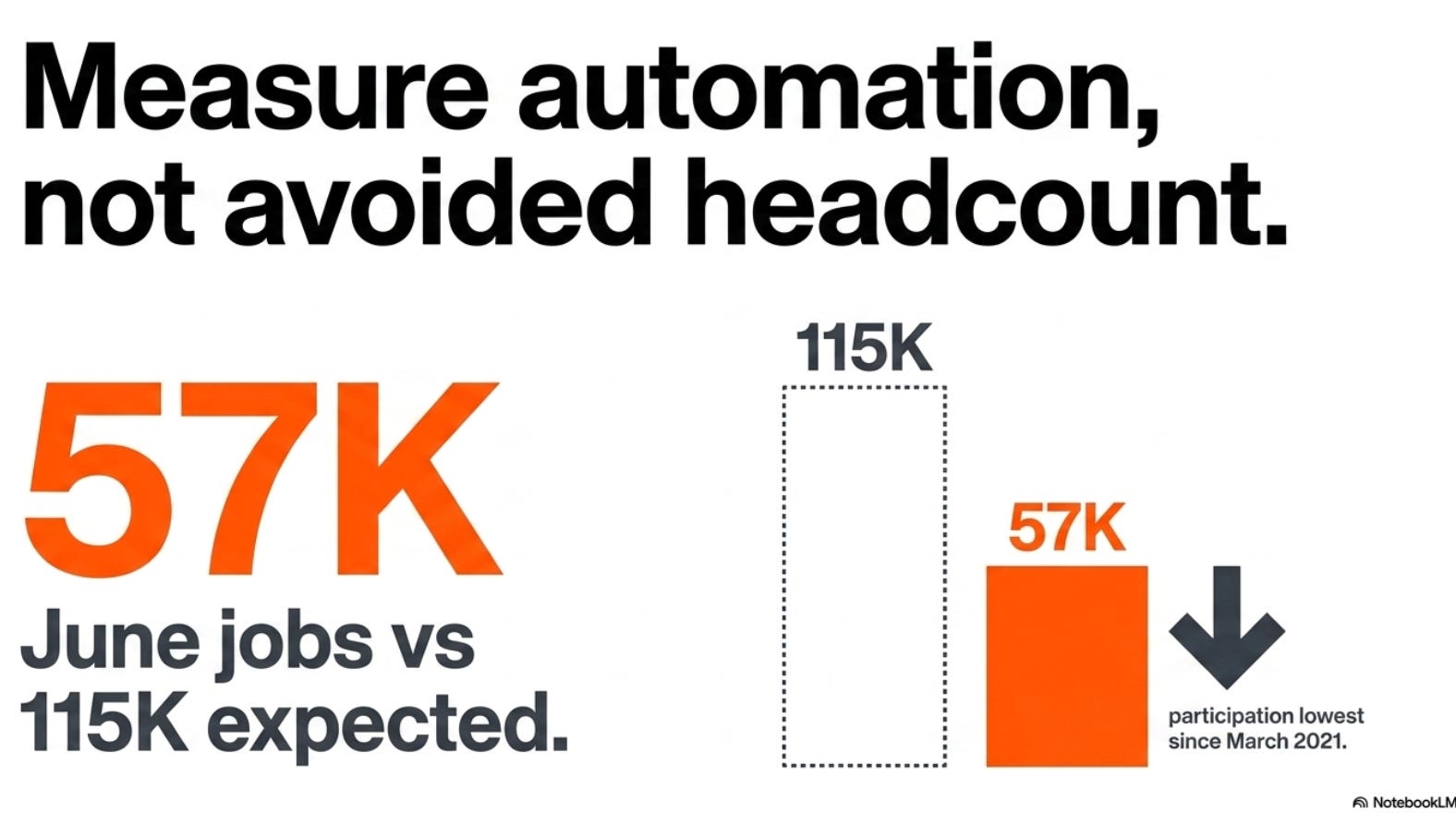
What to do: If you are going to be asked to defend AI’s impact on your workforce, and you will be, I’d separate the real automation from the cover story in your own numbers first.
Measure the tasks actually automated and the cycle time actually saved, not just the headcount you avoided, because that is the difference between a defensible claim and a story that falls apart under a board member’s follow-up question.
References:
Microsoft Frontier Company (GeekWire, 2026-07-02): https://www.geekwire.com/2026/microsoft-announces-2-5b-frontier-company-to-embed-ai-engineers-inside-customers/
AWS Forward Deployed Engineering (Amazon, 2026-06-30): https://www.aboutamazon.com/news/aws/aws-1-billion-forward-deployed-ai-engineers
NVIDIA compute financing model (NVIDIA, 2026-07-01): https://blogs.nvidia.com/blog/nvidia-unlocks-ai-compute-at-scale-capital-partners-to-power-ai-infrastructure-buildout/
Claude Sonnet 5 (Anthropic, 2026-06-30): https://www.anthropic.com/news/claude-sonnet-5
OpenAI government-stake proposal (The Guardian, 2026-07-02): https://www.theguardian.com/technology/2026/jul/02/openai-stake-us-government-ai-sam-altman
Anthropic export controls lifted (The Guardian, 2026-07-01): https://www.theguardian.com/technology/2026/jul/01/anthropic-fable-mythos-ai-models-us-export-controls-lifted
California–Anthropic deal (gov.ca.gov, 2026-06-29): https://www.gov.ca.gov/2026/06/29/governor-newsom-announces-a-first-of-its-kind-partnership-providing-anthropic-tools-to-state-agencies-and-improving-services-for-californians/
Meta Compute (TechCrunch, 2026-07-01): https://techcrunch.com/2026/07/01/meta-like-spacex-looks-to-turn-excess-ai-compute-into-cash/
Anthropic–Samsung chip talks (Economic Times, 2026-07-02): https://m.economictimes.com/tech/artificial-intelligence/anthropic-in-talks-with-samsung-to-develop-custom-ai-chip/articleshow/132163085.cms
Tesla AI-spend cap (Times of India / The Information, 2026-07-05): https://timesofindia.indiatimes.com/technology/tech-news/as-riding-costs-hurt-tesla-tells-employees-you-cannot-spend-more-than-200-on/articleshow/132191659.cms
BioShocking attack (LayerX, 2026-07): https://layerxsecurity.com/blog/bioshocking-ai-gaming-the-ai-browser-and-escaping-its-guardrails/
June jobs report (BLS, 2026-07-02): https://www.bls.gov/news.release/empsit.nr0.htm